
What Is the SAFE Act and How Does It Protect Wild Horses from Slaughter?
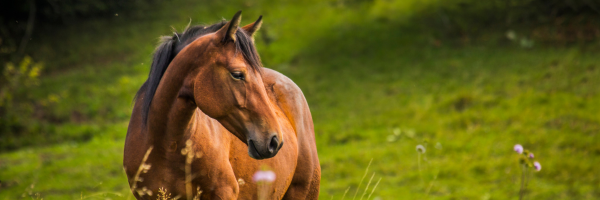
In spring of 2026, federal officials moved 68 wild mustangs out of a long-term holding facility in Idaho and sent them 1,800 miles to a livestock buyer in Ohio, who paid $25 a head for the group. Within a day, two transport trucks arrived after dark, loaded the horses, and left. Where those horses ended up has never been confirmed.
That case is documented in a New York Times investigation into the Bureau of Land Management (BLM), the federal agency that is legally responsible for protecting wild horses. The Times found this Ohio case wasn’t an outlier — thousands of wild horses have moved through a nearly identical chain of transactions over the past year. It’s not an enforcement failure. It’s how the system is built to work.
The SAFE Act is the federal bill that would shut this pathway down for good. Here’s why the current system treats wild horses as disposable, what the SAFE Act would change, and how voters can make Congress move on it.
A political system that treats horses as inventory
Wild horses were granted federal protection in 1971 as, in Congress’s own words, “living symbols of the historic and pioneer spirit of the West.” Slaughtering a wild horse in the U.S. is against the law. Shipping one across the border for that purpose is against the law. On paper, these animals are protected.
In practice, that protection isn’t attached to the horse — it’s attached to a bureaucratic status the BLM assigns and can revoke. A horse who’s adopted keeps federal protection for life. A horse who’s designated “unadoptable” and sold loses it immediately. And the bar for that reclassification is astonishingly low: three unsuccessful weeks on an adoption website is enough for the agency to move a living, healthy animal into a sale pipeline with no further oversight, and no requirement that anyone track where they go next.
This is a political choice, not an unavoidable fact of managing wildlife. An agency answerable to elected officials has decided that once a wild horse is legally classified as “sold,” that horse’s life stops being anyone’s responsibility.
How the loophole works and who profits from it
Buyers in the BLM’s official sale program sign paperwork agreeing not to slaughter the horses they buy, and not to knowingly pass them to anyone who will. The Times found the loophole sits one step downstream: a buyer who resells to a broker without asking what that broker plans to do isn’t violating the agreement. The broker never signed anything with the BLM at all, and faces no restriction on selling that horse into slaughter. Every party in the chain stays technically compliant while a wild horse ends up on a truck bound for a slaughter facility in Canada.
The financial incentives make the outcome close to inevitable. Capturing and holding a single mustang can cost the government upward of $3,000, while the agency sells that same horse for as little as $25 — and a horse can bring as much as $750 once resold into the slaughter market. According to The Times, the BLM sold roughly 3,700 wild horses in 2025, more than double the total from the year before, and estimated that doing so saved the agency about $56 million it would otherwise have spent on long-term care. That is a federal agency treating the lives of protected animals as a line item to be cut.
Advocates have started building an independent paper trail using the identification brand every captured mustang carries. At a single sale event in Oklahoma this spring, at least 55 branded horses turned up days later at Kansas and Texas livestock auctions known for supplying slaughter buyers. Groups tracking these cases say they’ve now identified more than 250 wild horses funneled this way over the past year, most of them young and healthy — exactly the animals who should have been easiest to place in homes, not fastest to disappear.
This isn’t a story about a rogue trader or a paperwork gap that slipped through unnoticed. It’s what happens when the law lets an agency’s budget pressures decide which animals get to keep their protections and which don’t.
Why “population management” isn’t the whole story
Congress has drawn a firm line against the BLM killing healthy wild horses directly — proposals to use marksmen or a gas chamber have surfaced before and been rejected, because voters made clear they wouldn’t accept it. But that same accountability doesn’t extend to what happens after a horse is legally sold, and that gap is where this loophole lives.
Part of what’s driving the sales is a holding system that has become financially unsustainable: roughly 58,000 wild horses and burros currently live in BLM long-term holding at a cost of about $100 million a year, consuming most of the agency’s entire wild horse budget. Framing wild horse sales as neutral “population management” obscures what’s actually happening — an agency under budget pressure using a legal loophole to make animals it’s supposed to protect disappear from its books, and from public accountability along with them.
What the SAFE Act would actually change
The Save America’s Forgotten Equines Act — the SAFE Act, introduced as H.R. 1661 in the House and S.775 in the Senate — closes the loophole itself, not just the paperwork around it. This is genuinely bipartisan legislation: it has been co-sponsored by both Democrats and Republicans in Congress, reflecting the fact that opposition to horse slaughter cuts across party lines. The bill would make it a federal offense to knowingly slaughter any equine for human consumption, or to ship, transport, buy, sell, or donate a horse toward that end, regardless of how many buyers a horse passed through along the way.
That’s a meaningful shift in where accountability sits. Horse slaughter is currently unavailable in the U.S. only because Congress has repeatedly declined to fund the USDA inspections a slaughter facility would legally need — a budget decision revisited every appropriations cycle, not a standing law. That impermanence is exactly what allows a program like the BLM’s horse sales to function as a workaround: because the underlying prohibition is indirect and can shift with the political winds, a chain of resales can slip a horse through it. The SAFE Act replaces that funding maneuver with a direct, permanent ban and closes the export route currently sending American wild horses to slaughter facilities abroad — taking the decision out of the hands of an agency with a financial incentive to look away.
This is what political power for animals looks like
Voters For Animal Rights exists because laws like the SAFE Act don’t pass on their own — they pass when elected officials know their constituents are watching and voting on these issues. The BLM’s sale program has continued for as long as it has because there’s been no political cost to letting it continue. Every call, email, and public record request that documents where these horses are actually going raises that cost.
Wild horses can’t vote, can’t lobby their representatives, and can’t hold anyone accountable when a federal agency quietly routes them into a slaughter pipeline. The people who can do that are the ones reading this. Passing the SAFE Act means using exactly that kind of political leverage to close a loophole that currently exists only because too few people knew to demand otherwise.
What you can do right now
The SAFE Act needs more co-sponsors, and this investigation has put real political pressure behind the case for passing it now. Telling your members of Congress to support the bill is the most direct way to close the loophole this reporting exposed — and to make clear that voters, not budget spreadsheets, decide what happens to America’s wild horses.
Take action today at vfar.org/SAFEAct.