
Why Elephants Don’t Belong in Captivity
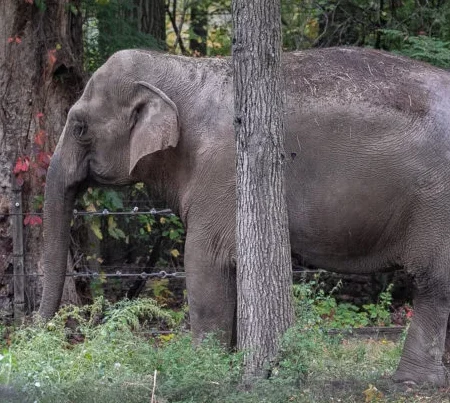
Elephants are among the most intelligent, social, and far-ranging animals on Earth. In the wild, they walk up to 30 miles a day, live in complex multigenerational family groups, and form bonds that can last a lifetime. In captivity, none of that is possible. No zoo enclosure, however large, can replicate what an elephant needs to thrive — which is exactly why elephants in captivity consistently show signs of physical and psychological breakdown that wild elephants simply don’t experience.
At Voters For Animal Rights (VFAR), we’ve spent years pushing for stronger protections for captive wildlife in New York, including elephants held in city facilities. Here’s why we believe captivity is fundamentally incompatible with elephant welfare and what’s being done about it.
Elephants Are Built to Roam, Not Stand Still
Wild elephants spend most of their waking hours walking, foraging, and exploring vast home ranges that can span hundreds of square miles. Even the most spacious zoo habitat offers a tiny fraction of that space. The result is a well-documented condition in captive elephants: chronic foot and joint disease caused by standing for long periods on hard or unnatural substrates. Arthritis, abscesses, and degenerative joint conditions are common causes of euthanasia and death in zoo elephants — conditions rarely seen in wild populations at the same rate.
Social Isolation Takes a Lasting Toll
Elephant society is built around tight-knit, multigenerational matriarchal herds. Calves stay close to their mothers and aunts for years, and adult females often remain with their birth herd for life. Most zoos simply cannot offer this. Many facilities house only one or two elephants, separating them from the kind of social structure elephants depend on for emotional stability. This isolation has been linked to stereotypic behaviors — repetitive swaying, head-bobbing, and pacing — that researchers widely interpret as visible signs of psychological distress.
Captivity Shortens Elephant Lives
Multiple long-term studies comparing zoo elephants to wild and semi-captive populations have found that elephants born in zoos tend to have significantly shorter lifespans than their wild counterparts. Stress, inactivity, obesity, and limited veterinary ability to treat wide-ranging animals all contribute to this gap. An animal who could live 60–70 years in the wild may not make it past their 30s or 40s in a zoo setting.
The Bronx Zoo Example
New Yorkers don’t have to look far to see these issues play out. The death of Happy, a 51-year-old elephant who spent over a decade living largely alone at the Bronx Zoo before her passing in 2026, drew national attention to the welfare of elephants in single or small-group enclosures. Patty, currently the last elephant remaining at the Bronx Zoo, lives under the same structural limitations — limited space, limited social contact, and no realistic path to the kind of life elephants are built for.
These aren’t isolated incidents. They’re the predictable result of trying to keep a highly mobile, highly social megafauna species inside a fixed urban enclosure.
Sanctuaries Offer a Real Alternative
This isn’t an argument that elephants should be abandoned — it’s an argument for moving them somewhere they can actually thrive. Accredited elephant sanctuaries, such as The Elephant Sanctuary in Tennessee and the Performing Animal Welfare Society (PAWS) in California, offer hundreds of acres, natural terrain, and the chance for elephants to form new social bonds with other elephants. Sanctuary placement is the outcome animal protection advocates are pushing for when a captive elephant’s situation can be changed.
What New York Can Do: Intro 590
In New York City, Intro 590 would prohibit the keeping of elephants in captivity for entertainment or exhibition purposes, paving the way for elephants like Patty to be retired to an accredited sanctuary instead of remaining in a city zoo enclosure for the rest of her life. Legislation like this builds on precedents already set by NYC’s wild animal circus ban and reflects a growing public understanding that some species simply cannot have their needs met behind bars, no matter how well-intentioned the facility.
How You Can Help
Elephants didn’t evolve to live in enclosures, and decades of welfare research make clear that captivity takes a measurable toll on their bodies and minds. Supporting policies like Intro 590 is one of the most direct ways New Yorkers can push for a future where elephants are retired to sanctuaries rather than kept on exhibit indefinitely.
Patty doesn’t have to spend the rest of her life alone in an enclosure. Sign the petition to send Patty to sanctuary and help build the public pressure needed to get her — and elephants like her — the life they deserve.
If you’re a New Yorker, you can go a step further: contact your City Council member and urge them to support Intro 590, the bill that would end elephant captivity in NYC for good.