
NYC Carriage Horse Industry: 10 Facts Everyone Should Know
Every day, horses pull carriages of tourists through some of the most congested streets in the country — sharing lanes with taxis, buses, pedicabs, e-bikes, and delivery trucks. For decades, New Yorkers have been told this is a harmless tradition. The facts tell a different story.
Below, we break down what’s really happening in the NYC carriage horse industry, including the tragic events of June 2026 that have reignited calls for a citywide ban.
1. A Tourist Died After a Carriage Horse Bolted in Central Park
On June 17, 2026, an 18-year-old tourist from India, Romanch Mahajan, was killed after the horse pulling his family’s carriage spooked and bolted near Central Park’s Tavern on the Green. The carriage flipped, and Mahajan was thrown and suffered fatal injuries. He had come to New York to celebrate his high school graduation. This marks the first known passenger fatality from a carriage incident in the park.
2. It Was the Second Deadly Incident in Just Over a Week
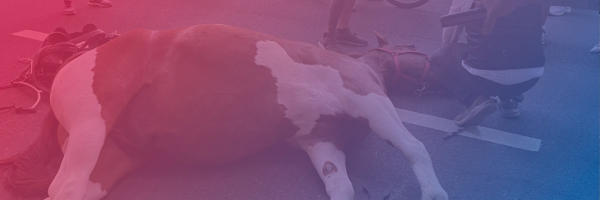
Eight days earlier, on June 9, a 16-year-old carriage horse named Deniz collapsed and died near East 90th Street while giving a ride with two passengers aboard. A necropsy later revealed the death was caused by ingestion of a toxic ornamental shrub. The horse was working the streets of Manhattan at the time — a stark reminder that the same conditions that endanger the public also put horses’ lives at risk every single shift.
3. Horses Have to Walk Through Heavy Traffic Just to Get to Work
Carriage horses don’t live in Central Park. They’re stabled blocks away on Manhattan’s West Side, which means every horse has to make what the New York City Bar Association calls a hazardous mile-and-a-half trek through city traffic — twice a day, every working day — just to get to and from the park. That commute means breathing in vehicle exhaust while surrounded by the noise and chaos of midtown Manhattan, before the horse has even started its actual workday.
4. Carriage Horses Live in Multi-Story Stables, Not Barns
These horses don’t go home to a pasture or a barn at night. They’re housed in multi-story buildings in Hell’s Kitchen, reached by walking up steep interior ramps to upper floors — a daily routine more suited to a tenement building than to a 1,000-pound animal. Stalls can be as small as 60 square feet, just barely large enough for a horse to turn around and lie down, and many lack windows or proper ventilation in the heat.
5. Carriage Horses Get Almost No Turnout
Daily access to pasture, known as “turnout,” is considered essential to a horse’s physical and mental health. Carriage horses don’t get it. NYC carriage horses spend only a single five-week period each year away from pavement — the rest of the time, they live and work entirely on concrete and asphalt, with no grass, no pasture, and no real rest for their joints, hooves, or minds.
6. The Tragedies Are a Pattern, Not a Fluke
The Central Park Conservancy has tallied eight carriage-horse-related incidents in and around the park in just the past 13 months, including a January 2026 incident where a horse bolted into traffic and collided with cars. Runaway horses, spooked animals, and carriage collisions are not isolated freak accidents — they’re the predictable result of confining a flight animal to a daily routine of hard pavement, heavy traffic, and almost no real rest. VFAR has documented this pattern for years, incident after incident, on the streets of Manhattan.
7. The Industry Has Been Temporarily Shut Down — But That’s Not Enough
Following the June 17 fatality, the Transport Workers Union Local 100 suspended all carriage operations in Central Park while it reviews safety protocols. But a pause doesn’t change the daily reality these horses live with the rest of the year: the same stables, the same commute through traffic, and the same lack of turnout that put them at risk in the first place.
8. Heat and Hard Pavement Take a Toll Their Whole Lives
Constant exposure to vehicle exhaust and hard pavement can contribute to chronic respiratory and joint problems over time, and hot asphalt can run far hotter than the surrounding air, straining hooves and increasing the risk of dehydration in summer. None of this is a one-time incident — it’s the slow toll of a lifetime spent on city streets. VFAR has long tracked these conditions firsthand on the ground in NYC.
9. New York City Has Banned Other Forms of Animal Exploitation Before
NYC has already shown it’s willing to act: the city banned foie gras sales after a years-long advocacy campaign and prohibited wild animal circus acts within city limits. These wins prove that when New Yorkers organize and demand change, the city follows through — you can see VFAR’s full record of victories here. Horse carriages, with all the cruelty built into their daily routine, can — and should — be the next outdated practice retired for good.
10. You Can Help End It
The carriage horse industry won’t end on its own. Horses will keep walking through traffic, sleeping in multi-story stables, and living without real turnout until enough New Yorkers and visitors say clearly: not in our city, not anymore. Every signature on the petition adds pressure on the people with the power to finally change that.
It’s Time to Ban Horse Carriages in NYC
Horses don’t belong on the streets of one of the busiest cities in the world — walking miles through traffic, climbing ramps to stables stacked three stories high, and going almost an entire year without ever touching grass. Voters For Animal Rights is calling on New York City to pass Romanch’s Law, formerly known as Ryder’s Law, end horse-drawn carriages once and for all.
Sign the petition now to ban horse carriages in NYC: 👉 vfar.org/banhorsecarriagesnyc