
How Climate Change Is Already Hurting Wild Animals in New York
When we talk about climate change, the conversation often drifts toward polar bears on shrinking ice or coral reefs bleaching in distant oceans. It can feel far away. But for the wild animals who share New York with us — moose in the Adirondacks, whales off the coast of Long Island, turtles in our wetlands, and songbirds migrating through our backyards — climate change isn’t a future threat. It’s already here, and it’s already changing how, where, and whether they survive.
At Voters For Animal Rights, we believe wild animals deserve to live according to their own needs, instincts, and rhythms — not squeezed into whatever margins human-driven warming leaves behind. Understanding what’s happening to wildlife in our own state is a critical first step toward building the political will to do something about it — and it’s exactly the kind of work our Animal Voter Collective members help fund every month.
Adirondack Moose: Pushed to the Edge of Their Range
New York’s moose population sits at the southern edge of the species’ range, and that geography is becoming a liability. Moose are built for cold: thick fur, a body designed to conserve heat, not shed it. As Adirondack winters grow shorter and milder, moose are forced to work harder to stay cool, burning energy they need for survival and reproduction.
Warmer winters are also extending the season in which winter ticks can latch onto moose, according to reporting from Adirondack Explorer. A delay of just a couple of weeks in the onset of winter can meaningfully lengthen the window ticks have to find a host, and a single moose can end up carrying tens of thousands of them. Heavy tick loads cause anemia, hair loss from excessive scratching, and in severe cases, death. Wildlife biologists who have spent decades studying New York’s moose now say the species may not have a long-term future in the state at all, as climate change continues to erode the cold, snowy conditions moose evolved to need — while warmer, less snowy winters also let white-tailed deer expand into moose habitat, bringing brain worm and other parasites that deer carry but moose cannot tolerate. Other research on the decline of moose across the Northeast points to the same underlying pressure: a species built for cold running out of cold places to live.
Ticks on the Move: A Warning Sign Across New York’s Forests
The same warming trend driving the moose-tick crisis is reshaping the range of the blacklegged (deer) tick across New York more broadly. According to Adirondack Explorer’s coverage of regional tick research, ticks are expanding northward into the Adirondacks and climbing to higher elevations than they historically reached, carrying Lyme disease and several other pathogens with them. North Country Public Radio’s reporting on Adirondack climate science notes that counties which once saw few tick-borne illness cases are now reporting sharp spikes in Lyme disease and related conditions. The National Wildlife Federation connects this pattern to a broader trend: warmer winters acting as a welcome mat for ticks to expand their range across the country. This is a clear, on-the-ground example of how a warming climate doesn’t just affect “wildlife” in the abstract — it reshapes entire ecosystems, with consequences for wild animals and the humans who share their habitat alike.
North Atlantic Right Whales: Following a Vanishing Food Source
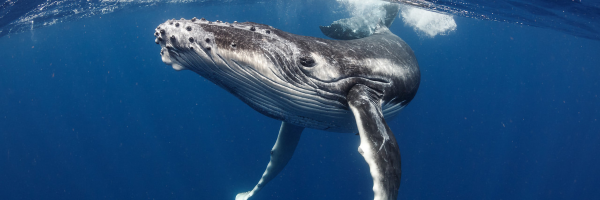
Off the New York coast, one of the planet’s most endangered whales is being forced into a desperate game of catch-up. North Atlantic right whales depend on dense swarms of a tiny, fat-rich crustacean that thrives in cold water. As the Gulf of Maine warms — at a pace far faster than the ocean surface average — that prey has thinned out and shifted location, and the whales have followed it into new waters, including areas off southern New England and Long Island that weren’t traditionally part of their range.
The problem is that these “new” waters often lack the protections — like seasonal speed limits and gear restrictions — that exist in the whales’ historic feeding grounds. NOAA Fisheries attributes the species’ continued decline to this shifting distribution layered on top of existing threats like ship strikes and entanglement in fishing gear. With fewer than 400 North Atlantic right whales left, every animal lost to a preventable, climate-driven habitat shift pushes the species closer to extinction.
Jamaica Bay: A Wildlife Refuge Disappearing Beneath Rising Water
Jamaica Bay, tucked between Brooklyn and Queens, is one of the most improbable wildlife habitats in America — a tidal marsh ecosystem visible from the subway, home to horseshoe crabs, diamondback terrapins, and hundreds of species of migratory birds that rely on it as a stopover along the Atlantic Flyway. It’s also disappearing.
Jamaica Bay has lost roughly 1,400 acres of tidal salt marsh since the 1920s, and the pace of that loss has accelerated in recent decades. Research published in PNAS found that sea levels are rising faster than the marsh can naturally rebuild itself with sediment, and as the marsh erodes, so does the nesting habitat horseshoe crabs need each spring, the mudflats shorebirds depend on for migration fuel, and the cover terrapins use to lay their eggs. Inside Climate News’ reporting on New York City’s marshes describes Jamaica Bay as one of the areas most vulnerable to this kind of inundation. For a metropolis built almost entirely on filled and engineered land, Jamaica Bay is a rare reminder of how much wild life still depends on New York’s coastline — and how much of it is at risk as that coastline keeps changing shape.
Why This Matters for Animal Advocacy in New York
These four examples — moose, ticks, whales, and marshland — might seem unrelated, but they tell the same story from different angles: climate change doesn’t wait for habitat loss, pollution, or hunting to threaten wild animals. It compounds them. A moose already stressed by deer-borne parasites now also overheats. A whale already endangered by ship traffic now also has to swim further from food to find it. A marsh already squeezed by a century of development is now also drowning.
This is why climate policy is animal protection policy. Every decision New York State and City make about emissions, coastal resiliency, land use, and wildlife management either widens or narrows the margins wild animals have left to adapt. Advocating for strong climate action isn’t separate from advocating for animals — it’s one of the most consequential forms that advocacy can take.
What You Can Do
Voters For Animal Rights works to translate this kind of urgency into real legislative and electoral change in New York. You can help by:
- Staying informed on state and city legislation that affects wildlife habitat, coastal resiliency, and emissions — and contacting your representatives when bills are on the table.
- Supporting wetland and habitat restoration efforts in your area, including projects working to rebuild marshland in Jamaica Bay and along the New York coastline.
- Voting with wildlife in mind. Climate policy is decided by the people we elect. VFAR’s electoral advocacy work exists to make sure animal protection is part of that conversation.
- Becoming a monthly donor. Sustained funding is what lets VFAR track legislation, mobilize advocates, and show up at hearings year-round, not just when a crisis is in the headlines.
Wild animals can’t vote, write letters to their senators, or testify at a city council hearing. That’s why this work falls to us. The moose in the Adirondacks, the whales off our coast, and the shorebirds of Jamaica Bay are all telling us, in their own way, that the climate is changing faster than they can adapt to it. The least we can do is listen — and act.
Ready to put your support behind New York’s wild animals on an ongoing basis? Join the Animal Voter Collective, Voters For Animal Rights’ monthly giving program, and help fund the advocacy that protects them.