
15 Canada Goose Facts That Will Change How You See New York’s Most Misunderstood Bird
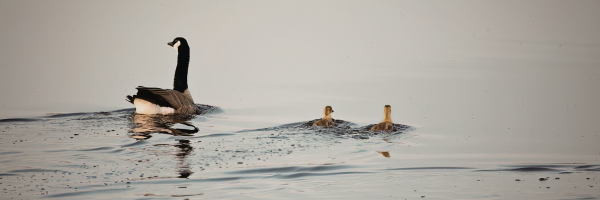
If you live in New York, you’ve seen them: long V-formations overhead in autumn, families grazing on a park lawn, a watchful adult hissing at anyone who gets too close to their goslings. Canada geese are one of the most familiar birds in the state — and also one of the most misunderstood. Too often, they’re treated as a “nuisance” rather than what they actually are: intelligent, deeply social animals with complex family lives and remarkable cognitive abilities.
At Voters For Animal Rights (VFAR), we believe that understanding an animal is the first step toward protecting them. So let’s set the record straight with 15 facts about Canada geese that reveal just how extraordinary these birds really are.
1. They Form Lifelong Partnerships
Canada geese typically choose one mate and stay together for life, often for a decade or more. Pairs reunite each breeding season and work together to raise their young, sharing parenting duties in a way that few bird species do.
2. Goose Families Stay Together for Almost a Year
Goslings remain with their parents not just through summer, but often through their first migration south and back again — sometimes staying as a family unit for nearly a full year. That’s an unusually long parental investment in the bird world.
3. Both Parents Are Fiercely Protective
While the female (the goose) does most of the incubating, the male (the gander) stands guard nearby, ready to confront predators many times his size. This shared vigilance is a major reason goslings have relatively high survival rates compared to other waterfowl.
4. They Recognize Individual Faces — Including Human Ones
Research on geese and related waterfowl shows they can distinguish between individual humans and remember which ones have been kind or threatening. A goose that seems unusually wary of a particular person may simply remember a bad past encounter.
5. Their V-Formation Flying Saves Enormous Energy
That iconic V-shape isn’t just visually striking — it’s an aerodynamic strategy. Each bird flies slightly behind and to the side of the one in front, riding the uplift created by their neighbor’s wingbeats. Studies suggest this formation can reduce flight energy expenditure significantly, allowing geese to fly much farther than they could alone.
6. They Take Turns Leading
Flying at the front of a V-formation is hard work. Canada geese rotate the lead position during long flights, sharing the burden so no single bird tires out the whole group — a built-in cooperative system.
7. Geese “Talk” to Each Other in Flight
The honking you hear from a passing flock isn’t random noise. Researchers believe it functions as ongoing communication and encouragement, helping birds in the back of the formation keep pace and stay coordinated.
8. Some Populations Don’t Migrate at All
While many Canada geese undertake long seasonal migrations, a growing number of “resident” populations — especially in urban and suburban parks — stay in the same general area year-round, particularly where food and open water are reliably available.
9. Goslings Can Swim Within Hours of Hatching
Unlike many baby birds, goslings are precocial — born with their eyes open, downy feathers ready, and the ability to walk, swim, and feed themselves almost immediately after hatching.
10. They Have Excellent Memories
Canada geese remember migratory routes, nesting sites, and feeding grounds across years, often returning to the exact same locations season after season. This spatial memory is part of why removing geese from one location rarely solves long-term “conflicts” — without addressing root causes, geese (or others) simply return.
11. Their Population Rebound Is a Conservation Success Story
In the early 20th century, overhunting and habitat loss pushed some Canada goose populations to alarmingly low numbers. Conservation protections under laws like the Migratory Bird Treaty Act helped populations recover dramatically — a recovery now sometimes mischaracterized as an “overpopulation problem” rather than the conservation success it is.
12. They’re Protected Under Federal Law
Canada geese are protected under the Migratory Bird Treaty Act, which makes it illegal to kill, harm, or harass them — or destroy their nests and eggs — without a specific federal permit. This is a key legal fact that often gets lost when municipalities propose “goose management” programs involving lethal removal.
13. Conflicts Are Almost Always About Human Land Use
Most human-goose conflicts arise because we’ve created ideal goose habitat: mowed lawns, retention ponds, and open sightlines near water that mimic the exact conditions geese evolved to seek out. The “problem” isn’t the geese adapting — it’s our landscaping choices.
14. Humane, Non-Lethal Solutions Already Exist and Work
Habitat modification (taller grass buffers, altered sightlines), egg addling under permit during appropriate windows, and simple changes to deter feeding can all reduce conflicts without killing a single bird. Cities and parks departments that invest in these approaches see longer-term success than those relying on culls.
15. New York Has Repeatedly Chosen Mass Killing Over Humane Alternatives
Despite the above, Canada geese in New York — including in and around New York City parks and near airports — have been subjected to large-scale roundups and gassing operations for years, even when non-lethal alternatives were available and effective elsewhere. These decisions are made by agencies and officials who respond to public pressure. That means public pressure can also change them.
Why These Facts Matter
Canada geese aren’t an invasive nuisance to be eliminated — they’re native, intelligent, family-oriented animals navigating a landscape humans have radically reshaped. When officials reach for lethal “management” instead of proven non-lethal solutions, it’s often because they assume New Yorkers won’t push back. Every fact you just read is a reason to prove that assumption wrong.
Help Us Protect Canada Geese — and Every Animal
Voters For Animal Rights fights for the animals that policy too often overlooks, from Canada geese facing mass culls in city parks to horses, elephants, and companion animals across New York State. We do this through legislative advocacy, public pressure campaigns, and direct engagement with the officials who make these life-or-death decisions.
We’re an all-volunteer organization, which means every dollar goes directly toward the campaigns that protect animals like the geese you just read about.
Your donation today helps us:
- Push back against lethal goose “management” programs in favor of humane alternatives
- Advocate for stronger protections under New York State law
- Mobilize New York voters to demand accountability from elected officials