Animal Testing: Facts, Laws and How to End It
Animal testing is far from a thing of the past. In fiscal year 2024, U.S. research facilities reported using or holding 775,297 animals that the federal government even bothers to count, including 42,880 dogs, 12,004 cats and 104,808 monkeys and other primates. That number leaves out mice, rats, birds and fish bred for research, who make up the vast majority of animals in labs.
Animal testing isn’t a law of nature. It persists because of rules written by legislators and regulators, and because of where public money flows. That makes it a political issue, and it means voters in New York have real power to end it.
Here’s how it works, why the science is moving past it, what’s changing in Washington and Albany, and what you can do right now.
What is animal testing?
Animal testing is the use of live animals in experiments to study disease or to check whether drugs, chemicals, medical devices and consumer products are safe. Animals are force-fed or injected with substances, exposed to chemicals on their skin and eyes, or bred to develop diseases, and most are killed when the study ends.
The species the USDA tracks tell part of the story. In fiscal year 2024, facilities reported:
| Species | Animals used or held (FY 2024) |
|---|---|
| Guinea pigs | 134,086 |
| Rabbits | 115,043 |
| Monkeys and other primates | 104,808 |
| Hamsters | 72,443 |
| Pigs | 45,005 |
| Dogs | 42,880 |
| Cats | 12,004 |
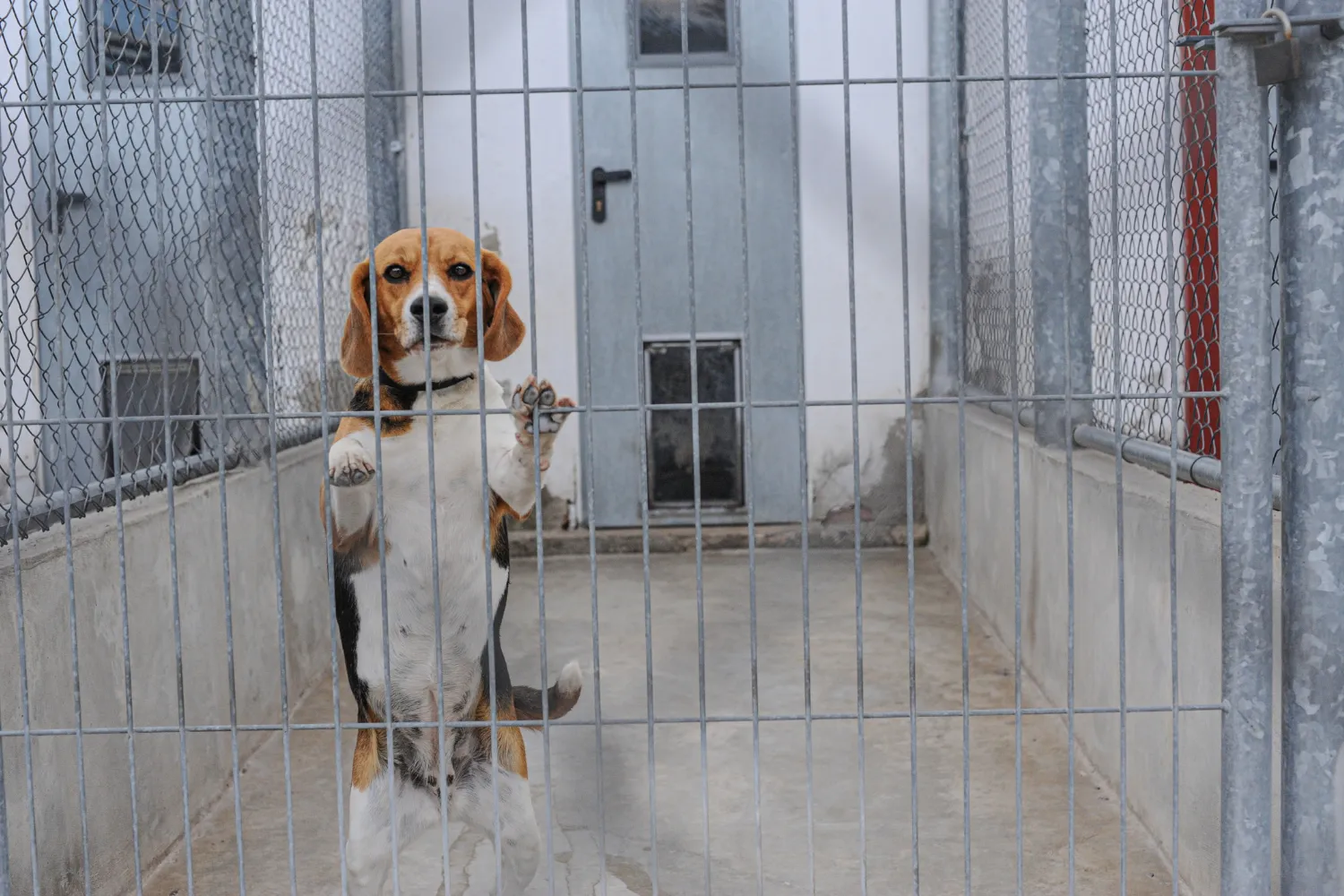
Beagles are the dog most used in labs because they’re gentle and trusting. Many have never felt grass under their feet until a rescue group brings them home.
Why is animal testing bad?
More than 90 percent of drugs that pass animal studies never win FDA approval, often because of safety or efficacy problems that only show up in human trials. That’s not an activist talking point. It’s the FDA’s own figure.
A mouse, a dog and a monkey are not small humans. Their bodies process drugs differently, which means animal tests can miss real dangers and flag safe treatments as harmful. Every failed lead costs patients years and costs taxpayers and drug developers billions.
And for the animals, the cost is total. Most animals in labs spend their lives in barren cages and are killed when the study ends.
Alternatives to animal testing
These alternatives are often called new approach methodologies, or NAMs. Because they’re built on human biology, they can answer questions that experiments on animals can’t.
- Organs-on-chips. Small devices lined with living human cells that mimic how a lung, liver or heart responds to a drug.
- Organoids. Tiny, lab-grown versions of human tissue, grown from human stem cells.
- Computer and AI models. Software that predicts toxicity using large datasets of chemical and clinical information.
- Human-based studies. Real-world safety data from people already using a drug, plus imaging and very low-dose studies in volunteers.
- Lab-grown human skin and eye tissue. Cell-based tests that replace painful irritation tests on rabbits.
The science is promising. EU research found that organ-chips are better at catching unexpected safety problems before human trials begin. But every validated alternative only helps animals if regulators accept it and lawmakers require it to be used.
What’s changing in Washington
For decades, federal law effectively required animal experiments for new drugs. Advocates changed that through legislation, and the momentum is building:
- 2022: FDA Modernization Act 2.0. Congress removed the requirement that new drugs go through animal experiments before human trials, allowing drug developers to use non-animal methods instead.
- 2025: FDA roadmap. The FDA announced a plan to phase out animal testing requirements, starting with monoclonal antibody drugs that have long relied on monkeys.
- 2026: NIH follows. NIH said it would no longer issue new funding opportunities focused exclusively on animal models of human disease, committed $150 million to human-based research methods, and opened a new office to scale non-animal methods.
- 2026: Regulations updated. The FDA issued a direct final rule to update outdated language in its drug regulations.
But agency policy can be reversed by the next administration, and law is much harder to undo. That’s why advocates are pushing Congress to lock in these changes through bills like the FDA Modernization Act 3.0, which has bipartisan support and would require the FDA to bring its rules in line with the 2022 law. Your members of Congress decide whether reforms like this move.
Animal testing laws in New York
New York has already shown that state law can protect animals in labs. Two laws are on the books:
- Research Animal Retirement Act (2016). State law requires publicly funded higher-education research facilities to offer healthy dogs and cats for adoption when research ends, instead of killing them.
- New York Cruelty Free Cosmetics Act (2022). Since 2023, New York has prohibited the manufacture and sale of cosmetics newly tested on animals, making it the 10th state to do so.
The next fight is about money. Public dollars still subsidize animal testing, and proposals like these would change that:
- The PETS Fund. The proposed PETS Fund (Promoting Ethical Testing Solutions Fund) would charge New York labs an annual fee based on how many animals they use, and put that money into grants and loans for human-relevant research. It has drawn sponsors from both parties in the State Senate.
- Ending state subsidies. New York City Council Reso 636, which VFAR supports, calls on the State Legislature and Governor to prohibit state funds and tax benefits for any entity that experiments on animals, or breeds or transports animals for that purpose.
The principle is simple: New Yorkers shouldn’t be forced to pay for methods that so often fail to predict what happens in people.
What about cosmetics?
Yes, in some places. More than 40 countries already prohibit the practice for cosmetics, the sale of those products, or both, according to industry reporting. The U.S. still has no federal prohibition, so states, including New York, have passed their own laws.
New York’s law covers newly tested products, with a few exceptions, such as testing required by another country’s regulators. To shop cruelty-free:
- Look for a trusted cruelty-free certification, such as Leaping Bunny, rather than vague “cruelty-free” claims.
- Check whether a brand sells in countries that require these tests by law.
- Remember that cosmetics are only part of the picture. Drugs, chemicals, and household products still go through these experiments, and changing that takes laws.
Why this takes political power
Every shift above happened because elected officials decided to act. The labs, trade groups and institutions that profit from these experiments have lobbyists in Albany and Washington. Animals need organized voters who show up for them.
That’s what Voters For Animal Rights does. We’re a nonpartisan organization that builds political power for animals in New York. We endorse candidates who champion animal protection, help elect them, and then hold them accountable in the Legislature and City Council.
When lawmakers know animal protection voters are paying attention, bills like the PETS Fund move. When they don’t, those bills sit in committee.
What you can do
- Get VFAR action alerts by text. We’ll tell you exactly when to call your legislators about these bills. Sign up here.
- Contact your members of Congress. Ask your U.S. senators and representative to support legislation that replaces animal testing with human-relevant science.
- Contact your state legislators. Ask your State Senator and Assembly Member to stop New York tax dollars from funding animal experiments.
- Vote for animals. Check VFAR’s endorsements before every election, from primaries to general elections.
- Join the Animal Voter Collective. Monthly gifts fund VFAR’s lobbying and electoral work year-round. Become a member.
- Volunteer. Help us reach voters and elect animal protection champions. Sign up to volunteer.
Animal testing FAQ
Is animal testing still required by law in the U.S.? No. Since the FDA Modernization Act 2.0 passed in 2022, federal law no longer requires new drugs to go through animal experiments before human trials. But some agency rules still reference those experiments, so advocates continue to push for regulations that match the law.
Is animal testing legal in New York? Yes, for most purposes. New York prohibits the sale of cosmetics newly tested on animals and requires publicly funded university labs to offer dogs and cats for adoption, but drug, chemical and biomedical experiments on animals remain legal.
What are the alternatives to animal testing? Organ-on-a-chip systems, lab-grown human organoids, computer and AI models, and human data from drugs already in use. Federal agencies call these new approach methodologies, or NAMs.
How many animals are used in testing each year? U.S. facilities reported 775,297 animals in fiscal year 2024 in the species the USDA tracks. Mice, rats, birds, and fish bred for research aren’t counted, so the true total is far higher.
Why is animal testing bad? Animals suffer and are usually killed, and the results often don’t apply to people. More than 90% of drugs that pass animal studies never win FDA approval.
What animals are used in animal testing? Mice and rats make up the majority. The USDA also tracks guinea pigs, rabbits, monkeys and other primates, hamsters, pigs, dogs, and cats.
Do companies still test on animals? Yes. Drug, chemical, and medical device companies still rely on these experiments, and some cosmetics brands do too in markets where it’s legal or required.
Is animal testing necessary? Less and less. Many tests can now be replaced with human-relevant methods, and federal agencies are phasing out these requirements where equal or better alternatives exist.
How can I help end animal testing in New York? Sign up for VFAR text alerts, contact your state and federal lawmakers about this issue, and vote for candidates who champion animal protection.
Header Photo: Jo-Anne McArthur / Animal Equality / We Animals