What Are Animal Rights? A Guide to Animal Rights, Laws, and Political Power
Animal rights is the idea that animals have interests of their own that deserve protection under law, including the right not to be confined, exploited, or killed for human profit or entertainment. It treats animals as individuals with lives that matter to them, not as property.
Most people already agree with the core of it. Ask almost anyone whether a dog should be beaten, a horse worked to collapse in city traffic, or a bird left to starve in a store window, and the answer is no. The gap is between what people believe and what the law actually says.
That gap is where Voters For Animal Rights (VFAR) works. For 10 years, we’ve turned public support for animals into laws in New York City and New York State by doing something most people don’t associate with animal rights: winning elections.
Do animals have rights in the United States?
Not in the full sense. Under U.S. law, animals are still classified as property, which means their protection depends almost entirely on statutes lawmakers choose to pass. Those protections are real, but they are narrow and full of exemptions.
- Anti-cruelty laws exist in all 50 states, and egregious cruelty is a felony everywhere. But most of these laws exempt “customary” farming practices, so the way the vast majority of animals are treated is legal by default.
- The federal Animal Welfare Act sets minimum standards for some animals in research, exhibition, and commercial breeding. It excludes the rats, mice, and birds bred for research, and it does not cover animals raised for food.
- The Humane Methods of Slaughter Act does not cover chickens and turkeys, the billions of birds killed for food each year.
- The PACT Act (2019) made certain acts of extreme animal cruelty a federal crime for the first time.
Animal rights vs. animal welfare
You’ll often see “animal rights” compared with “animal welfare.” The welfare view accepts that people will keep using animals and asks only that the use be less cruel. The rights view asks whether the use should happen at all.
At Voters For Animal Rights, we use the term animal protection most often because it covers the full range of laws that make animals’ lives better. Some laws end a harm outright, like New York City’s prohibitions on horse-drawn carriages and on wild animals in circus acts. Others reduce suffering for animals right now, like limits on extreme confinement and access to low-cost spay/neuter. Both kinds of laws protect animals, and we fight for both. Our ultimate goal is rights for all animals.
Why animal rights is a political issue
Every right animals have in law was written by an elected official. That makes animal rights a question of political power, not only of ethics.
The industries that profit from animals understand this. They lobby, they donate, and they show up at hearings. For decades, people who cared about animals mostly did not. They signed petitions and donated to rescues, which matters, but they rarely organized as voters. Lawmakers noticed.
Voters For Animal Rights was founded in 2016 to change that. We’re a nonpartisan 501(c)(4) organization, which means we can do what most animal charities can’t: endorse candidates, campaign for them, and lobby directly for animal protection bills. Our model is simple:
- Elect animal-friendly candidates. Our volunteers canvass, phone bank, and turn out voters for candidates who will champion animal protection.
- Lobby for strong bills. We meet with lawmakers and their staff, testify at hearings, and recruit co-sponsors.
- Mobilize voters. When a bill is moving, we make sure lawmakers hear from the constituents who elected them.
It works. The large majority of candidates VFAR endorses win their races, and lawmakers know that animal voters show up.
Animal protection laws VFAR has helped pass in New York
VFAR has led or supported the passage of 20 animal protection laws. Some of the biggest:
- Romanch’s Law prohibits horse-drawn carriages in New York City.
- The wild animal circus prohibition, VFAR’s first win, ended the use of wild animals in circus acts in New York City.
- The Puppy Mill Pipeline Act prohibits the retail sale of dogs, cats, and rabbits in pet stores across New York State.
- New York City’s guinea pig sales prohibition ended sales after hundreds of guinea pigs were abandoned in parks and surrendered to shelters. Surrenders have dropped more than 70% since.
- NYC’s backyard breeding law prohibits selling animals of any species from residences or anywhere other than a retail pet store in New York City.
- The slaughterhouse moratorium keeps new slaughterhouses from opening near homes in New York City.
- The full-service shelters law requires a full-service animal shelter in every borough.
Animal rights issues lawmakers decide
Animal rights is decided at every level of government, from Congress to your City Council. These are the main areas where laws can protect animals.
Farmed animals. Laws can prohibit extreme confinement like gestation crates and battery cages, stop new industries such as industrial octopus farming, and defend state protections from federal preemption.
Wildlife. Laws can protect endangered species and habitats, end taxpayer-funded wildlife killing and trophy hunting imports, and limit poisons like rodenticides that move up the food chain.
Companion animals. Laws can prohibit retail sales from puppy mills and breeders, fund low-cost spay/neuter, and make housing pet-friendly.
Animals in entertainment. Laws can prohibit horse-drawn carriages, wild animals in circuses, and keeping elephants captive in zoos.
Animals in research. Laws can cut public funding for animal testing and support alternatives.
Fur and fashion. Laws can prohibit fur sales and let cities and towns pass their own protections.
Federal laws can set a floor or wipe out state progress. State laws decide what’s legal across New York. City laws often go first and show the rest of the country what’s possible.
How to support animal rights (beyond signing a petition)
Compassion is the starting point. Political power is what turns it into law. Here’s how to build it.
- Vote with animals in mind. Check where candidates stand on animal protection before every election, including primaries, where VFAR-endorsed candidates have won by as few as 15 votes.
- Contact your elected officials. A call or email from a constituent carries more weight than you’d think, especially when a bill is close to a vote. Join VFAR’s mobile alerts to know when it counts.
- Volunteer on campaigns. Canvassing and phone banking for animal-friendly candidates is how VFAR wins races. Sign up to volunteer.
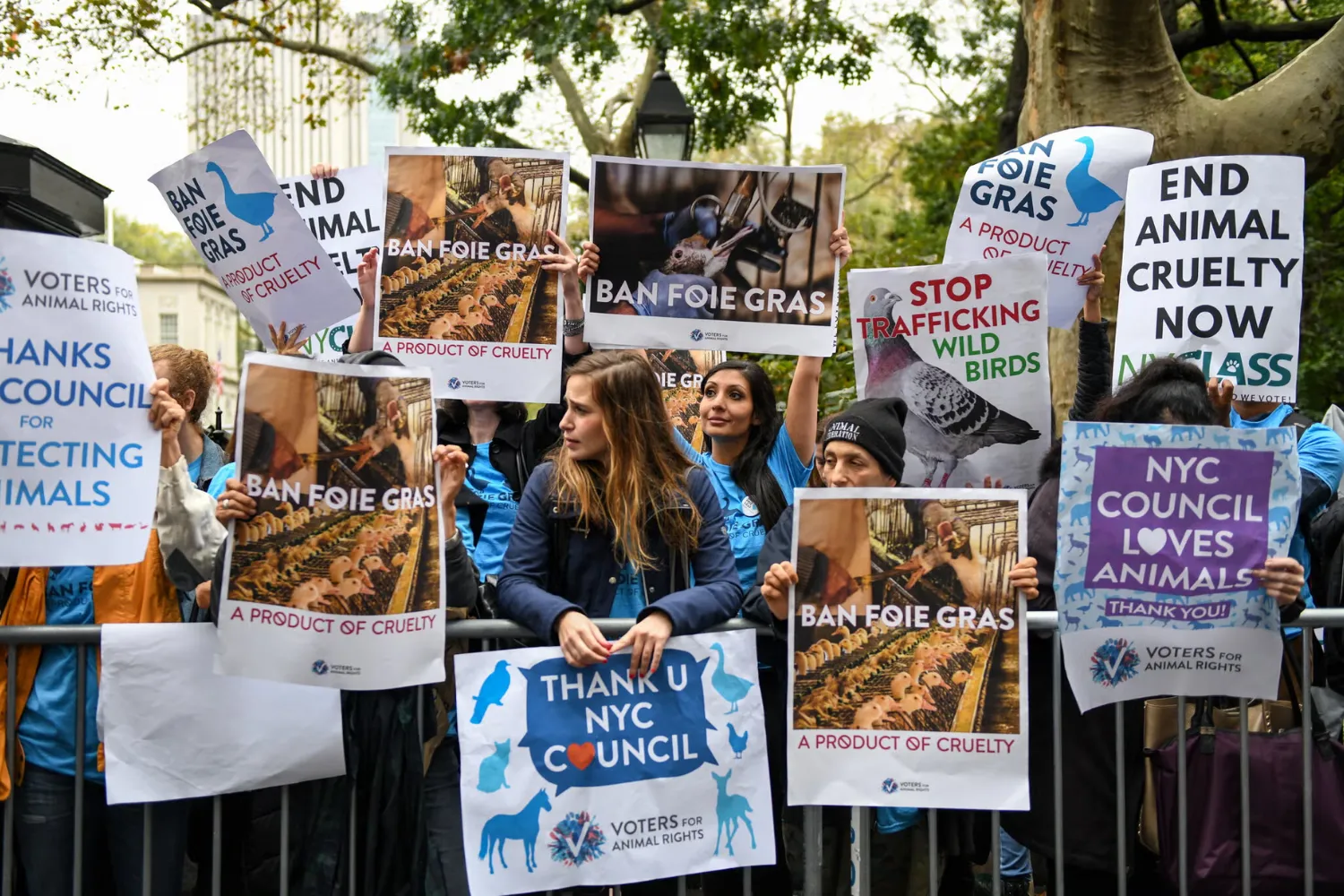
- Show up at hearings. Testimony on Romanch’s Law ran nearly 10 hours. Lawmakers notice who fills the room.
- Fund the political work. As a 501(c)(4), VFAR can lobby and endorse in ways charities can’t. Monthly members of the Animal Voter Collective keep that work going year-round.
- Make choices that reduce harm. Adopt instead of shopping, choose plant-based food, and skip entertainment that uses animals. Personal choices and political action work best together.
FAQ
What is the definition of animal rights?
Animal rights is the belief that animals have interests of their own, such as living free from confinement, pain, and exploitation, and that those interests deserve protection under law.
Do animals have legal rights?
In the United States, animals are legally classified as property. They are protected only by specific laws, such as state anti-cruelty statutes and the federal Animal Welfare Act, and those laws have broad exemptions, especially for farmed animals.
What is the difference between animal rights and animal welfare?
Animal welfare asks how animals can be used with less suffering. Animal rights asks whether animals should be used at all. VFAR uses the term animal protection and works for laws that end harm rather than regulate it.
What are examples of animal protection laws?
Examples in New York include the statewide prohibition on selling dogs, cats, and rabbits in pet stores, New York City’s prohibition on horse-drawn carriages, and the city’s prohibition on wild animals in circus acts.
How can I help advance animal protection?
Vote for candidates who support animal protection, contact your elected officials about animal bills, volunteer on campaigns, and support organizations that lobby for stronger laws.
Is animal rights a partisan issue?
No. Animal protection bills regularly pass with bipartisan support. New York’s industrial octopus farming prohibition passed the State Senate 55–5. VFAR is nonpartisan and endorses candidates from any party who will protect animals.
Animals need voters, not just sympathizers
Animals already communicate what they need. What they lack is political power in the rooms where laws are written. That power comes from voters who show up, organize, and hold elected officials accountable.
For 10 years, VFAR has proven that animal voters win, with 20 laws passed and a track record of electing champions for animals. Join the Animal Voter Collective and help us build the next decade of animal rights wins.