
Wildlife
Rat Poison: Why Rodenticides Fail and Kill Wildlife
Rat poison doesn’t work. Here’s what it does instead.
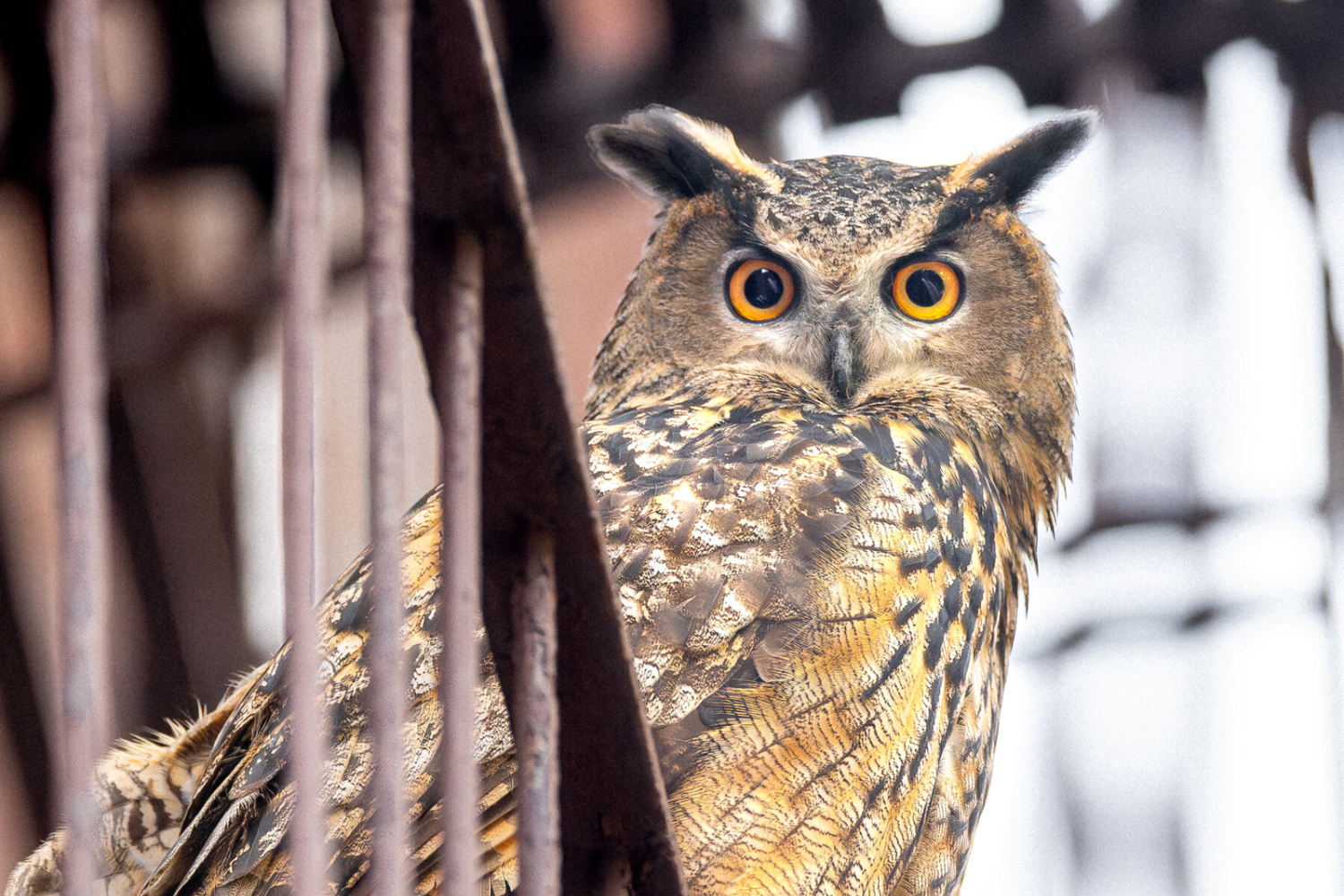
When Flaco the owl died in Manhattan in February 2024, his necropsy found four different rat poisons in his body. Those are the same poisons commonly used for rat control in New York City.
Flaco made headlines. Most animals poisoned by rodenticides never do. Hawks, owls, foxes, raccoons, community cats, and dogs are being poisoned in our parks, alleys, and backyards every day. And the rats keep coming back.
Rat poison is sold as a quick fix. It isn’t one. It fails at its own job, it causes days of suffering, and it moves up the food chain into the animals New Yorkers care about most. Here’s what rat poison is, why it doesn’t work, and what lawmakers need to do about it.
What is rat poison (rodenticide)?
Rat poison, or rodenticide, is a pesticide bait designed to kill rats and mice. It usually comes as pellets, blocks, or soft baits placed in bait stations along buildings, in basements, and in alleys. Most rat poison used in New York falls into a few types:
- First-generation anticoagulants (FGARs), like warfarin, diphacinone, and chlorophacinone. These block blood clotting. A rat has to eat them over several days to get a lethal dose.
- Second-generation anticoagulants (SGARs), like brodifacoum, bromadiolone, difenacoum, and difethialone. These are far more toxic. One feeding can be lethal, and the poison lingers in the body for months.
- Bromethalin, a neurotoxin that causes the brain to swell. There is no antidote.
- Cholecalciferol (vitamin D3), which drives calcium levels so high it causes kidney failure.
Anticoagulants are by far the most common. They’re designed to kill slowly on purpose. Rats are cautious eaters who sample new food and watch for effects. A delay of days means the rat never connects the bait to the sickness, so they keep eating it.
Why rat poison doesn’t work
New York has relied on rat poison for decades. Rats are still everywhere. That isn’t bad luck. It’s how poison works.
Rats bounce back fast. Brown rats typically have six litters a year, and their young can breed at about nine weeks old. Council Member Shaun Abreu has noted that two rats can produce 15,000 descendants in a single year. Poison a block, and the survivors and newcomers fill the gap. With less competition for food, they breed even faster.
Rats are becoming resistant. Resistance to anticoagulant poisons has been documented for decades. University of Reading researchers found the most severe resistance gene known, L120Q, spread across all of central southern England. It makes first-generation poisons and some second-generation poisons ineffective. Worse, the poison kills off susceptible rats and leaves a population of resistant ones behind.
Ineffective poison means more poison in the environment. When rats survive their bait, they keep eating it. Research from the University of Reading found that using compounds rats resist creates a long-term source of poison in the environment, extending how long and how severely other animals are exposed.
Poison ignores the cause. Rats live where there’s food and shelter. As long as trash bags pile up on curbs, poison treats a symptom while the buffet stays open. New York’s own Health Department has long taught that the real fix is to starve rats of food, not chase them with chemicals.
Why rat poison is cruel
Anticoagulant poisons kill by internal bleeding, and they do it slowly. A peer-reviewed review in the journal Animals found that anticoagulant poisoning causes extensive hemorrhaging, with death from severe internal bleeding occurring over days. The authors concluded this combination of severity and duration means very poor outcomes for every animal poisoned.
In laboratory trials, rats given brodifacoum bait died 3 to 8 days later. In those final days they became weak and lethargic, stopped eating, struggled to breathe, and bled from their mucous membranes.
Bromethalin is no gentler. It causes the brain to swell, leading to tremors, seizures, and paralysis.
Rats are intelligent, social animals who feel pain and fear. Nothing about a death that drags on for most of a week is humane. And a slow, weakened, disoriented rat stumbling through a park is exactly what a hawk, owl, or cat will catch.
Rat poison is wildlife poison
84% of dead birds of prey found in New York City tested positive for rat poison, according to research by the Wildlife Unit of the New York State Department of Environmental Conservation. State necropsy reports have documented more than 225 wildlife poisonings across more than 30 species, according to The New York Times.
This is called secondary poisoning. A poisoned rat doesn’t die right away. For days, they wander slowly and erratically, an easy target for predators. Every rat a hawk or owl eats adds to the poison building up in their body. Second-generation poisons are the worst offenders, because they can remain in an animal’s system for more than 100 days.
The evidence across New York is overwhelming:
- Statewide: Cornell University’s College of Veterinary Medicine found that 68% of red-tailed hawks tested across New York had rat poison in their systems.
- Flaco: The famous Eurasian eagle-owl had four different anticoagulant rodenticides commonly used in NYC in his body when he died in 2024.
- Barry and Lima: Barry, the beloved barred owl of Central Park, and Lima, the mate of Manhattan’s famous red-tailed hawk Pale Male, met similar fates.
- Our parks: In 2023, several red-tailed hawks found dead in and around city parks were killed by rat poison, according to state necropsies reviewed by THE CITY.
It’s not only birds. Foxes, raccoons, opossums, coyotes, and other wildlife eat rodents too. In California, the state’s Department of Fish and Wildlife found that 88% of raptors and 95% of mountain lions tested had been exposed.
Here’s the cruelest irony: hawks and owls are among the best natural rodent control we have. Every raptor poisoned is one less predator keeping rat numbers down.
Community cats and companion animals are at risk too
New York is home to thousands of community cats living outdoors in colonies cared for by dedicated rescuers. These cats hunt. That puts them directly in the path of poisoned rodents.
Veterinarians call this relay toxicosis. Cats who are skilled hunters face a high risk of being poisoned by eating rats who have eaten bait. A poisoned rodent who can barely walk is an easy catch. Repeated meals let the poison build up over time.
The danger depends on the poison:
- Anticoagulants cause bleeding that may not show up for days or even weeks. Signs include pale gums, nosebleeds, bloody urine or stool, and labored breathing. Vitamin K can help, but treatment often lasts four to eight weeks.
- Bromethalin has no known antidote, and cats are especially sensitive to it. East Coast veterinary clinics have reported a rise in cats dying from bromethalin exposure.
Community cats rarely get to a vet in time. They’re often found too late, or never found at all. Rescuers and trap-neuter-return (TNR) caretakers who feed colonies can do everything right and still lose cats to poison set out by a neighbor or a building.
Dogs are at risk too. They are more likely to eat bait directly. In Washington Heights, a Rottweiler puppy died after eating rat poison on a walk.
If you think a cat or dog has eaten rat poison or a poisoned rodent, call a veterinarian right away, even if they seem fine. Symptoms can take days to appear.
What works instead of rat poison
The good news: New York already has proof that prevention works better than poison.
- Containerize trash. Rats can’t thrive without food. In Harlem’s residential containerization pilot, 311 rat sighting complaints dropped 55%. Citywide containerization rules helped bring rat complaints down 24% year over year in January 2025.
- Use fertility control. Flaco’s Law, passed by the City Council in 2024, launched a pilot that distributes contraceptive pellets in rat mitigation zones instead of poison. Fewer rats are born, and nothing up the food chain gets poisoned.
- Seal entry points. Close gaps around pipes, doors, foundations, and vents with steel wool, hardware cloth, and metal flashing that rats can’t chew through.
- Cut off food and shelter at home. Store food and pet food in sealed containers, clean up fallen birdseed, and clear clutter and dense brush near buildings.
- Protect natural predators. Hawks and owls already patrol our city. Keeping their food supply poison-free keeps them on the job.
None of this requires poisoning anyone. It requires political will, and funding, to do it at scale.
Where the law stands, and what New York needs to do
Other states are moving. California banned second-generation anticoagulants in 2020. In 2024, Governor Newsom signed the Poison-Free Wildlife Act (AB 2552), expanding that moratorium to all anticoagulant rat poisons, the strongest protections in the country.
New York hasn’t caught up. The RAPTORS Act (Restriction of Anticoagulant Pesticide Transactions for Online and Retail Stores Act) would ban the sale of second-generation anticoagulant rodenticides statewide and prohibit all anticoagulant rodenticides within 500 feet of wildlife habitat like parks, wetlands, and nature preserves. The Senate version, S.7532, cleared the Senate in 2025. The Assembly version, A.10750, sponsored by Assemblymember Chris Burdick, was introduced in 2026. It still needs to pass both chambers and be signed by the Governor.
In New York City, Flaco’s Law was a strong first step. But a pilot in a few neighborhoods can’t protect hawks and owls who hunt across many miles. The city still uses anticoagulant poisons, and so do countless private buildings.
Voters For Animal Rights is pushing for:
- Passage of the RAPTORS Act in Albany
- An end to the use of second-generation anticoagulant rodenticides on New York City property
- Expanded, fully funded fertility control and containerization citywide
This is how animals win: when lawmakers know voters are watching.
Frequently asked questions about rat poison
Does rat poison actually get rid of rats? Not for long. Rats reproduce quickly and repopulate poisoned areas, and many populations are developing resistance. Removing food and shelter is what reduces rat numbers over time.
How long does it take rat poison to kill a rat? Anticoagulant poisons usually take several days, often 3 to 8, during which the rat bleeds internally.
Can rat poison kill hawks and owls? Yes. 84% of dead birds of prey found in New York City tested positive for rat poison, according to the NYS Department of Environmental Conservation’s Wildlife Unit.
Can my cat get sick from eating a poisoned mouse or rat? Yes. This is called secondary poisoning or relay toxicosis. Outdoor and community cats who hunt are at the highest risk. Call a vet immediately if you suspect exposure.
Is rat poison legal in New York? Yes. Second-generation anticoagulants are restricted to licensed applicators, but they are still widely used across the state. The RAPTORS Act would restrict them further.
What is the most humane way to deal with rats? Prevention. Containerize trash, seal entry points, remove food sources, and support fertility control programs.
Take action
Rat poison is a failed policy that New Yorkers are paying for with our wildlife and our cats. The City Council, the Health Department, and Mayor Mamdani can end NYC’s reliance on second-generation anticoagulant rodenticides, but only if they hear from voters.
Sign the petition: Tell NYC to stop poisoning hawks, owls, and cats →
Hawks and owls don’t stop at the city line. Wherever you live in New York, you can help pass the RAPTORS Act and get the deadliest rat poisons off store shelves statewide.
Sign the petition: Tell Albany to pass the RAPTORS Act →
Want to do more? Sign up for VFAR action alerts, and join the Animal Voter Collective to help build the political power animals need in New York.