
Wildlife
When the Elephants Left the Parade: A Tradition Worth Leaving Behind
On Saturday, November 28, 2026, the 100th Macy’s Thanksgiving Day Parade finally stepped off, two days late. A powerful coastal storm forced organizers to postpone the parade for the first time in its history.
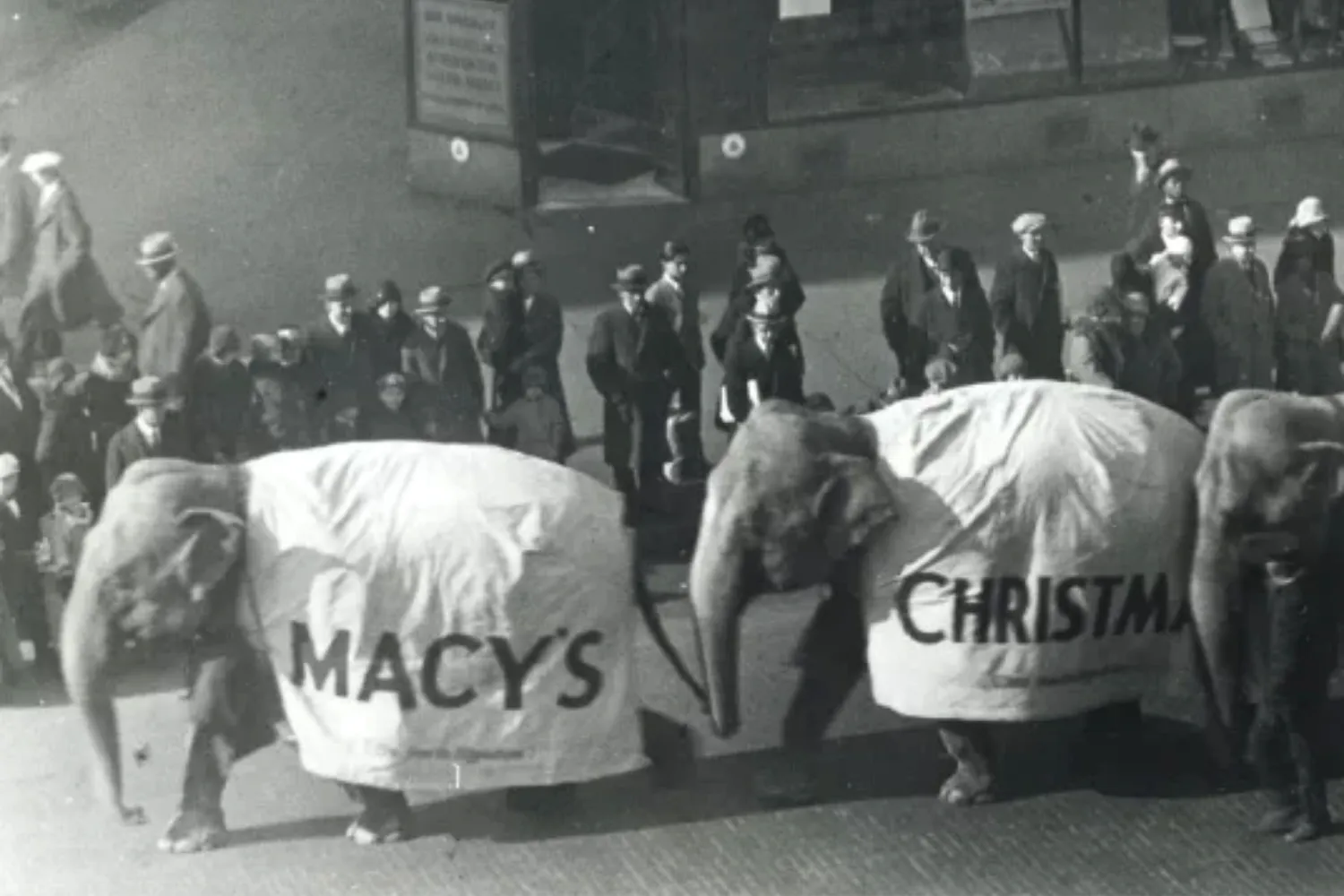
As giant balloons floated down Central Park West, few people watching knew that the parade’s first stars weren’t made of rubber or helium. They were living elephants, camels, bears, and monkeys, marched through Manhattan for a department store’s holiday promotion.
It’s true: the parade once featured elephants. That’s a piece of history worth sitting with, because it shows something we see over and over in this work: traditions that use animals can change. And when they do, almost nobody misses the old way.
A parade that started as a menagerie
The first parade, held in 1924, was called the Macy’s Christmas Parade. Store employees organized it to draw holiday shoppers. The organizer had worked in circuses, and it showed. Bears, elephants, camels, and monkeys borrowed from the Central Park Zoo were marched roughly six miles, from Harlem to Herald Square, alongside floats and brass bands.
The animals were made to walk a long route through screaming crowds. By the end they were exhausted and agitated, and their roars and cries frightened children lining the streets. Live animals appeared for only a couple more years.
In 1927, Macy’s replaced them with giant balloons designed by puppeteer Tony Sarg, starting with Felix the Cat. Elephants still made occasional appearances afterward, including a group in the 1954 parade. But the balloons became the parade’s signature, and the parade only grew. Today it draws 3.5 million people in person and tens of millions more on TV.
Elephants were never props
The 1920s accounts frame the problem as a scheduling headache: the animals got tired, the kids got scared, the crowds couldn’t see. From where we sit, the real problem is simpler. Elephants are not decorations.
In the wild, elephants live in close family groups, walk many miles a day by choice, and form bonds that last a lifetime. Putting them on display for entertainment, whether in a parade, a circus, or a theme park, means taking all of that away. It usually means chains, confinement, and training methods built on fear.
That isn’t just history. Right here in New York City, Patty, a 57-year-old elephant at the Bronx Zoo, has lived in solitary confinement since 2018. The Association of Zoos and Aquariums’ own standard says no elephant should live in a herd of fewer than three. Happy, who was captured from the wild as a calf, spent more than two decades isolated at the same zoo before she was euthanized in May at age 55. Patty is now the last elephant on exhibit in New York City. She doesn’t have to meet the same end.
Traditions evolve. Laws make it stick.
Every tradition was new once. The Macy’s parade changed its name, its route, its stars, and its technology, and it is more beloved now than ever. Swapping elephants for balloons didn’t break the tradition. It made room for it to grow.
New York has made this kind of change again and again, and it rarely happens on its own. It happens because voters demand it and lawmakers act.
- Wild animals in circus acts. VFAR’s very first legislative win was a law prohibiting the use of wild animals in circus acts in New York City.
- Horse-drawn carriages. Last month, the City Council passed Romanch’s Law 40–7, ending horse-drawn carriages in NYC. The prohibition takes effect June 1, 2028. Our next job is making sure every horse gets a dignified retirement before then.
- Elephants in city zoos. Voters For Animal Rights supports Intro 590, which would prohibit keeping elephants captive in small New York City zoo enclosures.
Each of these was once called “tradition.” Each had defenders who said it could never change. And each time, the city moved forward because people who care about animals showed up, organized, and voted.
One tradition we’re glad to leave behind
Nobody watching this morning’s parade wished there were chained elephants on Central Park West. Nobody felt the holiday was missing something. That’s the lesson: when we stop using animals for entertainment, the joy stays. Only the suffering goes.
We’re glad this is one tradition New York left behind a century ago.
Macy’s has evolved before. It can do it again.
Macy’s proved in 1927 that it could keep the magic and drop the harm. Its next chance is the Macy’s Fireworks Show.
The nights around the show are among the highest intake periods of the year at animal shelters. Terrified dogs and cats flee, injure themselves trying to escape, and go missing, and many are never found. The blasts disorient birds and wildlife across the region, and nesting animals abandon their young. The same sudden explosions can trigger PTSD episodes in veterans.
There’s a better way. Silent fireworks, already widely used in Europe, deliver the same visuals at a fraction of the noise. Drone light shows have no explosive sound, no fire risk, and no chemical fallout. As the most prominent fireworks show in the country, a change at Macy’s would set the standard for celebrations everywhere.
Tell Macy’s to evolve again. Sign the petition urging Macy’s to turn its fireworks show silent for animals and veterans.