
Victories
What Happened When NYC Pet Stores Stopped Selling Guinea Pigs
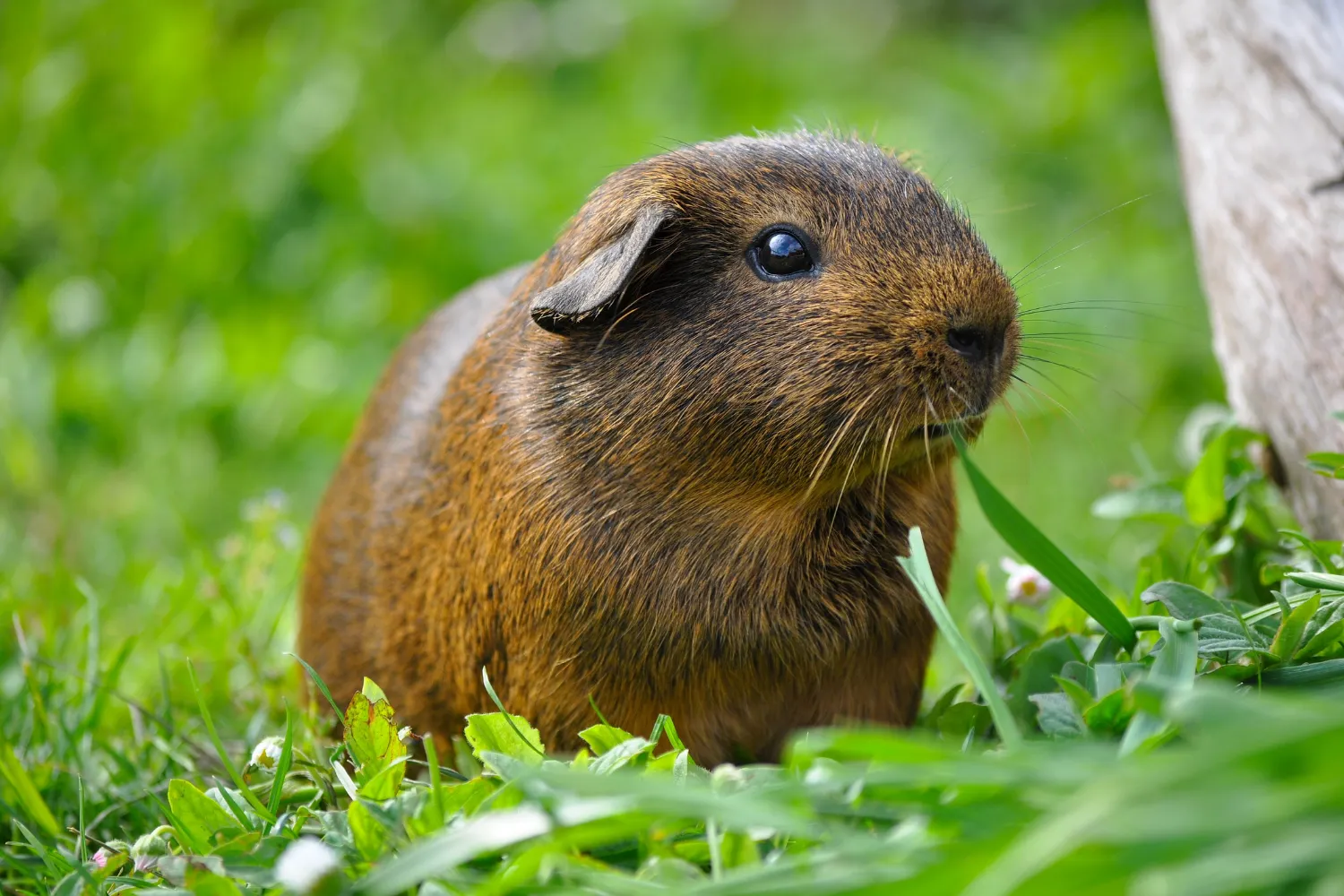
In the year following New York City’s prohibition of the sale of guinea pigs in pet stores, guinea pig surrenders to Animal Care Centers of NYC (ACC) dropped by roughly 70%. One law, passed with the votes of 42 Council Members, took the pressure off a shelter system that was drowning in guinea pigs and cut off a market for the cruel mills that breed them.
This is what electoral power for animals looks like when it works: a clear problem, a champion in office, a coalition that shows up, and results you can measure. Here’s how it happened, and where we’re taking it next.
Guinea pigs abandoned in NYC parks
During the pandemic, guinea pigs became one of the city’s most common impulse purchases. When the novelty wore off, many families didn’t bring them to a shelter. They left them outside.
Nine guinea pigs were dumped in Hudson River Park in 2022 before Parks Department urban rangers and ACC staff rescued them. Neighborhood groups reported more abandoned in parks across the city, and that same year 20 guinea pigs, five of them pregnant, were left in a Staten Island apartment lobby. Shelter officials warned that many overwhelmed guardians simply leave them in parks or on the street.
Guinea pigs are domesticated animals. They can’t survive a New York winter, can’t find the food they need, and are easy targets for hawks, dogs, and cars. Abandonment is illegal in NYC, but enforcement after the fact doesn’t save the animals who are already outside.
Why NYC needed a prohibition
The numbers told the story. Before the pandemic, ACC took in roughly 300 guinea pigs a year. By late 2022, intake had nearly tripled, and ACC had to buy a $20,000 guinea pig tower just to house everyone. As an open-admissions shelter, ACC can’t turn any animal away.
The source was clear, too. When ACC asked people surrendering guinea pigs where they got them, over half said a pet store. Chain stores sold guinea pigs for about $50, making them easy impulse buys for an animal who can live close to a decade.
And behind the pet store is the mill. The guinea pigs on store shelves come from commercial breeding operations, and advocates have long documented mill conditions where animals are bred in bulk and mistreated. In one case, a Pennsylvania small-animal dealer that supplied Petco and PetSmart was charged with cruelty on 28 counts.
Mills also keep the cycle going after the sale. Guinea pigs breed fast, pet stores weren’t required to spay or neuter them, and the surgery is delicate enough that only a few vets in New York City can do it. Every guinea pig sold was a potential litter waiting to happen, and shelters were left to absorb the results.
Public education alone couldn’t fix a supply problem. New York City needed to shut off the supply.
Deputy Speaker Diana Ayala’s leadership
This law exists because then-Deputy Speaker Diana Ayala made it a priority and didn’t let it die. She introduced Intro 4 in February 2022, and by that summer it had 34 co-sponsors, a supermajority of the Council. When the bill stalled in a legislative backlog, she kept pushing for a hearing.
At the Health Committee hearing in December 2022, Deputy Speaker Ayala brought her blind puppy, Charlie, to show how much care any animal needs, and urged families to “Think it through. Adopt.” She was candid that the hearing showed her the true magnitude of the crisis.
On April 11, 2023, the Council passed it 42–7, with 36 of 51 members signed on as sponsors. It became Local Law 54 of 2023, making New York the first U.S. city to prohibit guinea pig sales in pet stores. Ayala said the law would help the many abandoned guinea pigs find lifetime homes with New Yorkers.
Voters For Animal Rights led the advocacy campaign behind the bill, mobilizing our supporters to call and email their Council Members until the votes were there. That’s the model: we help elect and support champions, and then we give them the grassroots muscle to win.
Building on the Puppy Mill Pipeline Act
The guinea pig law didn’t come out of nowhere. Just months earlier, in December 2022, Governor Hochul signed the Puppy Mill Pipeline Act, prohibiting the sale of dogs, cats and rabbits in pet stores statewide. Voters For Animal Rights was part of the coalition that pushed it over the finish line after years of stalled sessions, and our then-president and founder Allie Taylor told reporters that animals in mills face “a lifetime of suffering”.
The state law took effect in December 2024. New York City’s guinea pig law mirrors it: same logic, same goal. If pet stores can’t sell animals bred in mills, the mills lose their market, and people looking for a companion are steered toward shelters and rescues instead.
Each win makes the next one easier. Lawmakers see that these prohibitions work, pet stores keep selling supplies and hosting adoptions, and voters notice who delivered.
Next: prohibit the sale of birds
Birds are living through the same crisis guinea pigs did, and the fix is the same. Intro 912, led by Council Member Harvey Epstein, would prohibit the sale of parrots, parakeets, cockatiels, finches and other companion birds in NYC pet stores, while keeping adoption from shelters, rescues and sanctuaries open. It builds directly on Deputy Speaker Diana Ayala’s work: she first introduced the bill in 2025.
New Yorkers already report dozens of escaped or abandoned parrots and parakeets every month. Most can’t survive a city winter. Voters For Animal Rights’ supporters recently funded a year of sanctuary care for Mei Mei, a parakeet who spent weeks alone in Central Park before rescuers caught her. She was lucky. Most birds aren’t.
The supply chain looks familiar. Birds sold in NYC pet stores come from out-of-state mills in Oklahoma, Texas and Florida, where federal inspectors in 2024 found dead parakeets in a barn with a 110°F heat index. That mill stayed open. Federal law exempts small breeders entirely and rarely punishes the rest.
And once the birds are sold, sanctuaries pick up the pieces. Veterinarians warn that most pet birds are kept under three years before someone tries to surrender them, and that rescues are already overcrowded and underfunded. Some parrots live up to 80 years, so every impulse sale can become a lifetime of need that sanctuaries simply can’t absorb. Rescuers in other cities describe a growing budgie crisis too.
Intro 912 needs 26 co-sponsors for a majority of the Council.
Take action: Tell your Council Member to co-sponsor Intro 912 at vfar.org/birds.