
The Hidden Cost of Macy's 4th of July Fireworks: Dogs, Wildlife, Veterans, and Toxic Pollution
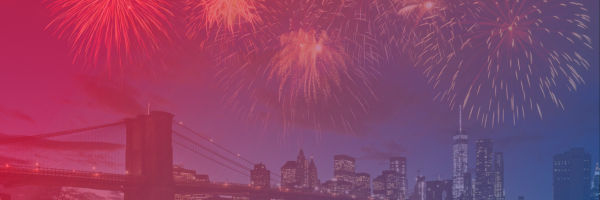
Every Fourth of July, the Macy’s 4th of July Fireworks show lights up the New York City sky with what it bills as the nation’s largest Independence Day celebration. This year’s 49th annual show fired more than 80,000 shells in 30 colors, reaching 1,000 feet above the East River — 20,000 more shells than the year before. Millions watch. Millions cheer.
And millions suffer in silence.
Behind the spectacle is a story Macy’s doesn’t tell: a 25-minute display that sends terrified pets bolting into traffic, drives wildlife into panic, poisons our waterways, and forces veterans with PTSD to barricade themselves indoors. Silent fireworks and drone light shows exist. They’re stunning. And they don’t leave a trail of suffering in their wake.
Sign our petition calling on Macy’s to go silent →
Your Dog and Cat Are Terrified by Macy’s 4th of July Fireworks
If you’ve ever had a pet, you know the scene. The shaking. The panting. The desperate scramble under the bed or behind the toilet. That terror is real, measurable, and for many animals, traumatic.
The Science of Fear
Fireworks produce sounds between 120 and 175 decibels — well above the 85 dB threshold at which hearing damage begins in humans. Because dogs and cats hear far more acutely than we do, those booms can cause actual pain. The explosions are also random and unpredictable. That unpredictability makes the fear response worse. It’s a multi-sensory assault of bangs, whistling, flashes, and vibrations that can quickly overwhelm an animal’s entire nervous system.
According to a 2026 Rover survey, 65% of pet parents say their dog or cat is afraid of fireworks. Moreover, 23% call it their pet’s number-one stressor. A peer-reviewed study found that 52% of dogs show fear responses during fireworks displays — panting, pacing, hiding, vocalizing, and an inability to settle. Some experience such chronic stress that their stress response eventually shuts down entirely. Researchers have compared this state to “vital exhaustion” — the animal equivalent of learned helplessness.
The Lost Pet Crisis
The consequences go beyond one bad night. July 4th is the single biggest lost-pet event of the year. Animal shelters report a 30% to 60% spike in stray intakes between July 4th and 6th. In fact, July 5th consistently ranks as one of the top three highest intake days for strays nationwide. The ASPCA reports that around 20% of all lost pets go missing after being scared by a loud noise. Tragically, only about 14% of pets lost during the July 4th period ever make it back home.
The vast majority of animals who bolt this July will never see their families again. Already, 78% of pet parents have skipped fireworks shows to stay home and comfort their pets. Furthermore, 57% say they would outlaw fireworks entirely to spare their animals. America’s pet owners are voting with their feet. It’s time for Macy’s to listen.
Wild Animals Have Nowhere to Run from Macy’s Fireworks
The terror doesn’t stop at our front doors. In the East River and New York Harbor — the very waters the Macy’s 4th of July Fireworks show launches its barges over — wild animals have no safe room to hide in. The same is true for every park, marsh, and green space in the five boroughs.
Birds in Panic
Birds are among the most severely affected. Radar tracking has documented birds launching into mass panic flights during fireworks, with disoriented flocks flying at night when they would normally be roosting. One major scientific review cataloged 133 observations across 88 bird species responding to fireworks through nest abandonment, panic flights, and prolonged exclusion from their home ranges. As a result, predatory birds like bald eagles often abandon their nests entirely. Some birds have even been driven so far out to sea in panic that they couldn’t make the return flight.
Marine Animals and Fish
Marine animals fare no better. At a 2007 Monterey Bay fireworks show, every single one of the 258 sea lions resting in the area fled into the water when the display began. Most didn’t return until the following morning. Similarly, schools of fish are scared off en masse, with some becoming stranded or entangled, mothers separated from their young, and individuals driven into dangerous territory. The U.S. Fish and Wildlife Service has warned that fireworks can cause wildlife to flee into roads, collide with buildings, and abandon nests — leaving young animals vulnerable to predators.
Beyond the immediate panic, noise pollution from fireworks can interfere with animal communication, disrupt mating calls, mask alarm signals, reduce reproductive success, and cause hearing damage across species. For fish, it can damage hearing, disrupt navigation, and interfere with spawning. For mammals, it compromises foraging, predator detection, and social coordination. In short, a brief celebration for us can mean devastating disruption — or death — for them.
The Macy’s 4th of July Fireworks Show Is a Pollution Event
What goes up must come down — and what comes down from a fireworks show is toxic.
Air Pollution
Fireworks release a cocktail of chemicals into the air, including carbon monoxide, sulfur dioxide, nitrogen oxides, ozone, and fine particulate matter. These pollutants harm respiratory health in animals and humans alike. Birds are especially vulnerable because of their sensitive respiratory systems. Even small amounts of these airborne toxins can cause oxidative stress, organ damage, and death.
Water Contamination
Then there’s what lands in the water. Fireworks contain perchlorate compounds — used as oxidizers to fuel combustion — that wash into waterways when debris settles. Studies have found perchlorate concentrations in nearby bodies of water can spike by over 1,000 times their normal levels after a single display. For example, one small Oklahoma lake registered a spike of 44.2 micrograms per liter after one show — a chemical shock that fish, amphibians, and aquatic invertebrates have no way to escape. At high concentrations, perchlorate interferes with thyroid hormone production in both animals and humans, disrupting development, metabolism, and neurological function. The EPA has taken this seriously enough to fund a major national research initiative specifically assessing perchlorate contamination from fireworks in lakes, rivers, and streams.
In addition, fireworks release heavy metals — lead, strontium, barium, copper — that leach into soil and water, altering the chemistry of aquatic ecosystems. Studies at Mount Rushmore National Memorial documented elevated perchlorate in soil and water samples years after fireworks displays in the area.
Macy’s is firing 80,000 shells directly over the East River. That’s not a celebration. That’s a chemical event with a 25-minute runtime and a multi-year ecological footprint.
The Fourth of July Is the Day Many Veterans Dread Most
The holiday is supposed to honor the people who defended this country. For hundreds of thousands of them, however, it’s the most dreaded day of the year.
Fireworks as Trauma Triggers
The VA’s National Center for PTSD is unequivocal: fireworks serve as powerful trauma reminders for veterans. The explosions, flashes, burning smells, and shockwaves trigger memories of combat, bombings, and gunfire. The nervous system reacts before the rational mind can intervene. For example, one veteran described in University of Colorado research threw himself across a room to shield his children from the “bomb attack” — trembling and terrified, his mind instantly back in Afghanistan — triggered by a neighbor’s firework.
The scale of this problem is significant. Between 11% and 20% of Iraq and Afghanistan veterans suffer from PTSD. About 12% of Gulf War veterans are affected. An estimated 30% of Vietnam veterans have lived with it. Overall, the VA estimates that 7% of all veterans will experience PTSD at some point in their lives. One VA psychiatrist put it plainly: “The instinct of many veterans is to avoid the holiday altogether — many patients I knew sought refuge in remote mountain campsites, often to find that even there they were not safe from revelers.” (Acuity International)
These are the people we’re supposedly celebrating. They deserve better than having to flee their own neighborhoods on Independence Day.
Autistic People and Sensory Processing
Veterans aren’t alone. An estimated 90% of autistic individuals experience sensory difficulties. Furthermore, up to 70% are affected by sound sensitivity specifically — compared to just 8% of the general population. For many autistic people, fireworks nights aren’t celebrations. Instead, they’re periods of intense sensory distress that can be physically painful. The same goes for people with ADHD and other sensory processing differences. Specifically, the sudden, unpredictable, high-intensity nature of fireworks is precisely what makes them so destabilizing for anyone whose nervous system processes the world differently. Patriotism should not require suffering.
A Better Macy’s 4th of July Fireworks Show Is Already Possible
The good news is that better alternatives already exist — and they’re already being used.
Silent fireworks — low-noise pyrotechnics already in use across Europe — produce the colors and choreography of a traditional display. At the same time, they dramatically reduce the acoustic impact on animals and people.
Drone light shows go even further. Cities including Salt Lake City and Boulder, Colorado have already replaced their fireworks displays with drone shows. Importantly, drones produce no chemical fallout, no perchlorate contamination, and no particulate metal pollution. They’re also reusable, eliminating the single-use waste of conventional fireworks. In addition, they present significantly less risk of fire, injury, or property damage. And the cost is comparable to a traditional fireworks show.
Macy’s already incorporated large-scale projection mapping on the Brooklyn Bridge this year. The innovation is already there. The question is whether they’ll extend it to the part of the show that causes the most harm.
The 50th anniversary show in 2026 is the perfect moment to make history for the right reasons.
What We’re Asking Macy’s to Do
Voters For Animal Rights is calling on Macy’s to transition their iconic show away from traditional explosive fireworks. Specifically, we’re asking them to move toward silent fireworks, drone light shows, or a hybrid approach that dramatically reduces noise and toxic chemical impact. Here’s what that looks like:
- Publicly commit to a transition timeline away from high-decibel traditional fireworks within the next three years.
- Pilot silent or low-noise fireworks for a portion of the show beginning with the 50th anniversary in 2026.
- Explore drone light shows as a complement to or replacement for pyrotechnics.
- Engage with veterans’ organizations and animal welfare groups to understand the full scope of harm the current show causes.
The best way to celebrate freedom isn’t to light the sky on fire. It’s to build a celebration that truly includes everyone — the dogs shaking under the bed, the sea lions driven from their resting spots, and the veterans who deserve to feel safe in their own country.
Take Action
Tell Macy’s it’s time to go silent — for animals, veterans, and our planet.
→ Sign the Petition
Share this post and spread the word. Every signature sends a message that America is ready for a celebration that doesn’t leave suffering in its wake.