
Victories
New York City Bans Horse Carriages: Inside the Historic Council Vote
The NYC Council voted 40–7 to pass Romanch’s Law, ending horse-drawn carriages by June 1, 2028. Here’s what the ban does, how we won, and what comes next.
On October 22, 2026, the New York City Council voted 40–7, with two abstentions, to pass Romanch’s Law (Intro 943). The New York City horse carriage ban ends horse-drawn carriage operations across the city by June 1, 2028.
Forty votes is a veto-proof majority on the 51-member Council, and it’s the result of years of patient, unglamorous political work. Carriages have operated in New York City since 1858. Mayors Bill de Blasio and Eric Adams both pushed for a ban, but the Council votes weren’t there. This time, they were.
For Voters For Animal Rights, this is one of the biggest wins in our history. For the horses who have spent their lives hauling tourists through Midtown traffic, it’s the beginning of the end of that life.
What Romanch’s Law Does
Romanch’s Law phases out the horse-drawn carriage industry in New York City over a two-year transition. Here’s what’s in it:
- A hard end date. The city will issue no licenses for carriage horses, horse-drawn cabs or carriage drivers on or after June 1, 2028.
- No slaughter, no resale. Owners cannot sell or transfer horses for slaughter or to another horse-drawn carriage business.
- A plan for workers. The Department of Consumer and Worker Protection must run a workforce development program to help drivers and other industry workers move into new jobs.
- Compensation on the table. The city must consider a program to compensate carriage owners for their businesses, licenses, and equipment.
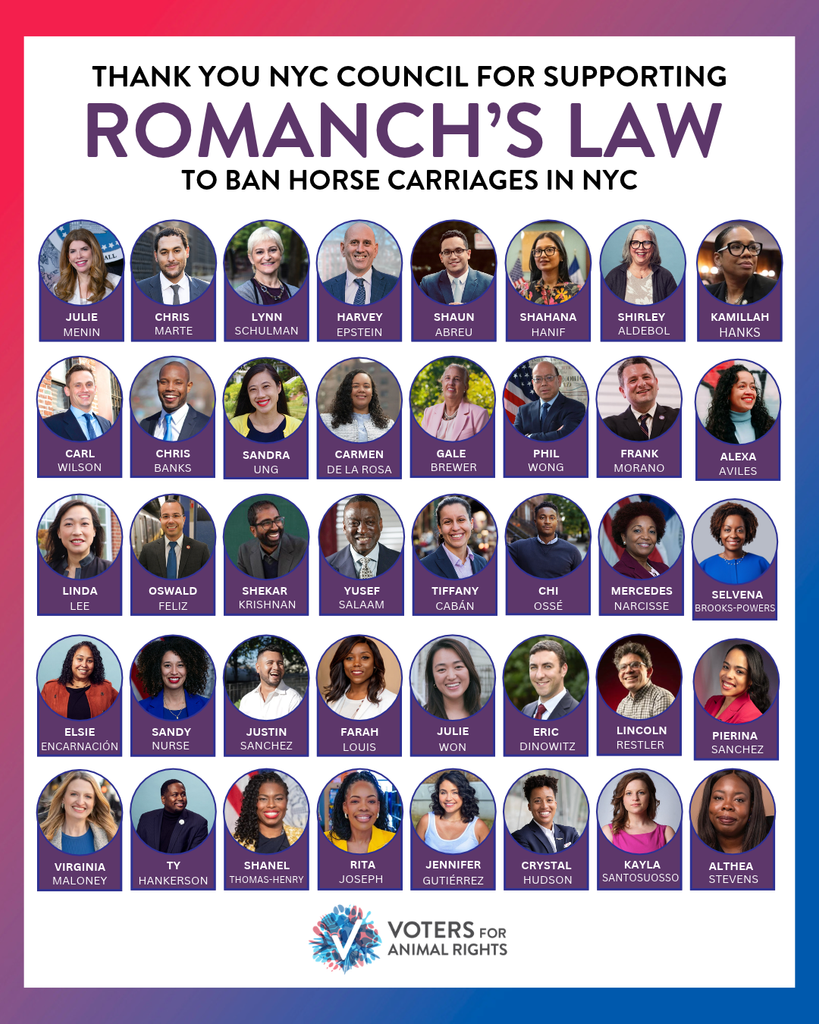
The bill was sponsored by Council Member Christopher Marte and championed by the Council’s Animal Welfare Caucus, launched this year by Speaker Menin and Council Member Harvey Epstein. Epstein, the caucus Chair, made the case for the bill alongside Marte in City & State. Majority Leader Shaun Abreu gave the campaign a major boost in July when he signed on as a sponsor, and Health Committee Chair Lynn Schulman held a hearing that lasted ten hours. Speaker Julie Menin moved the legislation forward after Mayor Zohran Mamdani and the Speaker reached a deal on October 13, which added worker protections for carriage drivers and owners.
Why New York Needed a Horse Carriage Ban
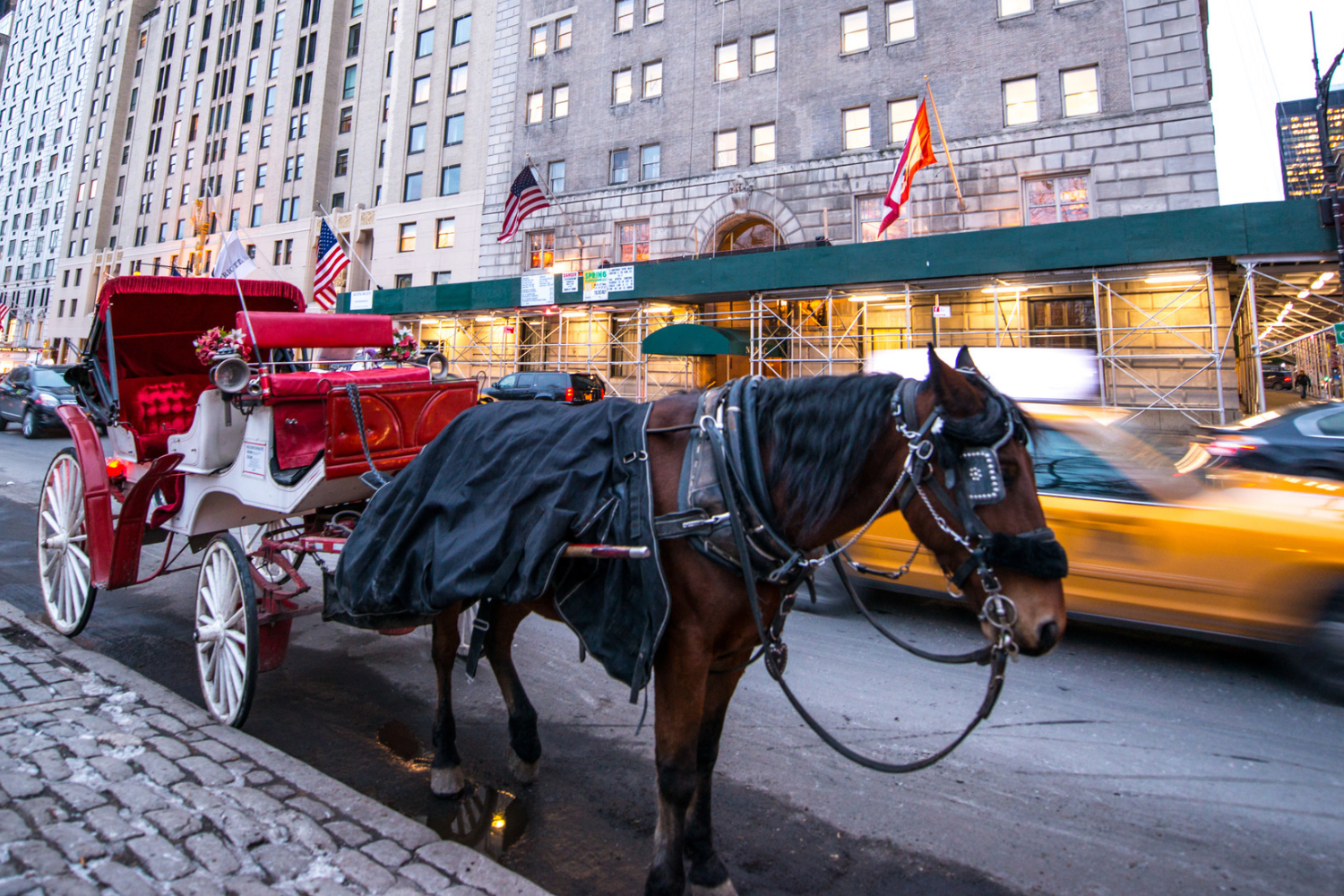
Horses are prey animals who startle easily. Putting them in Midtown traffic, in summer heat, next to buses and e-bikes, was always going to end in tragedy. The record proves it.
- August 2022: Ryder, a carriage horse, collapsed on a hot summer day while pulling a carriage in Manhattan. The bill first carried his name.
- June 9, 2026: Deniz, a 16-year-old carriage horse, collapsed and died during a ride in Central Park.
- June 17, 2026: A carriage horse named Samson bolted in Central Park. Romanch Mahajan, an 18-year-old visiting from India with his family, was thrown from the carriage and killed.
Romanch’s family turned their grief into advocacy. His aunt and uncle were in the chamber for the vote, and the law now carries his name.
New Yorkers were ready long before City Hall was. A July 2026 poll found that 68% of New Yorkers, more than two in three, supported ending horse-drawn carriages, with majority support across every borough and political party. Even the Central Park Conservancy, which manages the park, backed a ban as a matter of public safety.
How We Won: Political Power for Animals
Public support alone has never been enough to end the carriage trade. New Yorkers backed a ban for years, and bills still died in committee. What changed this time was power: a City Council where enough members were ready to vote for animals, and a movement organized enough to hold them to it.
That’s the work Voters For Animal Rights exists to do. Here’s what it looked like on Romanch’s Law:
- Counting votes. A bill needs 26 Council co-sponsors to pass. We worked member by member and helped push co-sponsorship past that mark to 29 by late summer.
- Showing up. We rallied at City Hall before the July 15 Health Committee hearing and stayed through nearly 10 hours of testimony.
- Mobilizing voters. Our supporters emailed their Council Members again and again, right up to the October 22 vote, so every office heard from constituents in their own district.
- Electing allies. In the 2025 New York City Council general election, 15 of the 17 Council candidates VFAR endorsed won, including bill sponsor Christopher Marte, Speaker Julie Menin, Majority Leader Shaun Abreu, and Health Committee Chair Lynn Schulman. Elected officials know animal voters turn out, and that shapes how they vote.
We see our relationship with elected officials as a partnership: finding common ground and a way forward for animals and the people who love them. Thank you to Council Member Marte, Speaker Menin, Chair Schulman, Council Member Epstein, Majority Leader Shaun Abrey, Mayor Mamdani, the 40 Council Members who voted yes, the Mahajan family, and every coalition partner and supporter who made this happen.
What Happens Next for NYC’s Carriage Horses
The bill now goes to Mayor Mamdani, who agreed to sign it into law as part of his deal with the Speaker.
Carriages will keep running until the ban takes effect on June 1, 2028. Between now and then, three things need watching:
- Where the horses go. The law bars owners from selling or transferring horses for slaughter or to another carriage business. We’ll press the city to make sure every horse lands in a sanctuary or a safe, permanent home.
- Implementation. City agencies have to deliver job support for carriage workers and wind down licensing on schedule.
- Legal challenges. The Transport Workers Union has vowed to sue. We’ll be ready to defend the law.
Winning the vote was the hardest part. Making sure the law delivers for the horses is the next job.
NYC Horse Carriage Ban: Frequently Asked Questions
Did New York City ban horse carriages? Yes. The NYC Council passed Romanch’s Law (Intro 943) on October 22, 2026, by a vote of 40–7. It heads to Mayor Mamdani, who is expected to sign it.
When does the NYC horse carriage ban take effect? June 1, 2028. Carriages can operate until then.
Can I still take a carriage ride in Central Park? Rides continue during the transition. We encourage visitors to skip them and explore the park on foot, by bike or in a pedicab.
What will happen to the carriage horses? The law prohibits selling or transferring them for slaughter or to another carriage business. VFAR will push for every horse to be placed in a sanctuary or safe home.
What is Romanch’s Law named after? Romanch Mahajan, an 18-year-old visitor from India who was killed in June 2026 when the carriage horse pulling his family’s carriage bolted in Central Park.
What was Ryder’s Law? The earlier version of the bill, named for Ryder, a carriage horse who collapsed on a Manhattan street in 2022.
What happens to carriage drivers? The city must run a workforce program to help drivers transition to new jobs and must consider compensation for owners.
Build the Power That Wins the Next Fight
Romanch’s Law passed because animal voters organized, showed up and held elected officials accountable. The next win depends on the same thing.
Want to make a lasting difference? Join the Animal Voter Collective, our monthly giving community, for as little as $10 a month.